
Analyses
The history of the Islamic Republic of Iran—established in 1979 following the revolution that overthrew Shah Mohammad Reza Pahlavi—is marked by a dense sequence of developments that have progressively altered its political and institutional configuration. These changes, however, have only sporadically been recognized by Western analyses, which have instead tended to perpetuate a more functional and instrumental stereotype based on the image of a monolithic, highly verticalized religious autocracy. While such a characterization was broadly accurate during the first decade of the Islamic Republic, it has undergone a profound transformation since 1989.
  • Cristoforo Spinella 6 November 2017
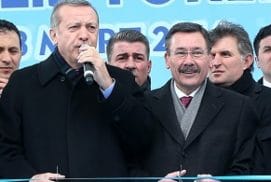
    When Melih Gökcek was mayor of the Turkish capital of Ankara, Recep Tayyip Erdoğan appeared on the national stage as Istanbul’s highest ranking official. It was 1994 and victory in the nation’s two most important cities achieved by representatives of political Islam, marked a turning point in the balance of power in a country still largely in the hands of secular elites and governed by the army.
  • Chiara Maritato 6 November 2017
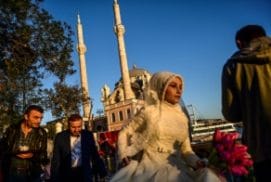
    On October 18, Turkish Parliament passed a law allowing muftis to perform civil marriages. “Want it or not, this will be passed by the Parliament!” announced Turkish President Recep Tayyip Erdoğan in response to the opposition parties, women’s rights organisations, feminist associations and women’s right activists who have protested the bill since its draft version.
  • Lea Nocera 6 November 2017
    A little less than a year and a half after the attempted coup d’état, the political and social situation in Turkey continues to be extremely critical. The vice on the opposition and on civil society, which in spite of everything continues the struggle in defence of democratic rights, becomes tighter every day.
  • Nilgün Tutal 3 November 2017
    After the failed coup attempt in Turkey in 2016, the AKP set about securing what Recep Tayyip Erdoğan referred to as ‘social and cultural power’. Nilgün Tutal studies processes of Islamisation in Ankara and Istanbul, showing how the political struggle in Turkey is about the imposition of a ‘legitimate’ cultural vision.
  • Assaf Sharon 31 October 2017
    It was not very long ago that religion was regarded as a relic, at least as far as politics are concerned. Now this picture itself seems an artifact of history. With the gods once again afoot in the public square, religion has returned to occupy political actors and theorists alike. Especially salient, of course, is the nationalist brand of religious revivalism, unmistakably associated with the indiscriminate political violence that has become a fixture of contemporary life.
  • Sergei A. Medvedev 26 October 2017
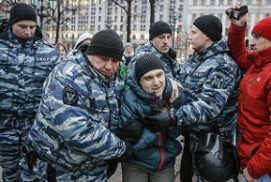
    This is the text of a lecture which will be delivered by prof. Sergei A. Mevdev (Higher School of Economics, Moscow) at the Conference Dimensions and Challenges of Russian Liberalism on Friday, Oct. 27.
Load more
SUPPORT OUR WORK


Please consider giving a tax-free donation to Reset this year

Any amount will help show your support for our activities

In Europe and elsewhere
(Reset DOC)


In the US
(Reset Dialogues)


x