
For decades, Latin America’s authoritarian regimes were seen as a right-wing phenomenon, with Cuba as the lone exception — a dictatorship born not from a betrayal of democracy, but of revolution. As Washington’s embargo returns to the headlines, this piece asks what that framing has long obscured: that Cuba has never had just one embargo, but two.
Analyses
- Roberto Toscano 20 November 2017But what is the contemporary world like and in particular, how can we describe contemporary international relations?
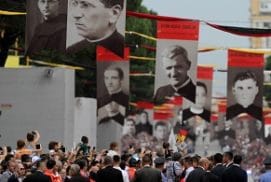
- Matteo Tacconi 16 November 2017Preserved in the library of the Catholic seminary in Shkodër are a number of the very few books which have survived the blaze set alight by communists at the immediate aftermath of the war.
- Sonia Grieco 13 November 2017Lebanon is hosting approximately 1.5 million Syrian refugees, (almost 25 per cent of Lebanon’s population), of which one million are officially registered with the United Nation, and mostly live in informal camps (known as informal tented settlements) scattered around the country.
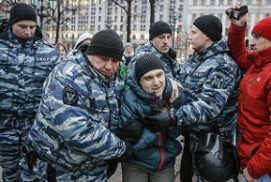
- Giovanna De Maio 9 November 2017While Moscow was getting ready for a fairly low-key hundredth anniversary celebration of the Bolshevik uprising, another revolution resonated in the anti-Putin activist circles.
- Pasquale Ferrara 8 November 2017Ethno-nationalism is at the centre of debates on the involution of the political sphere in Europe and in the western world. Some political analysts interpret this phenomenon as a re-edition of the nationalism of the XIX century and the first half of the XX.
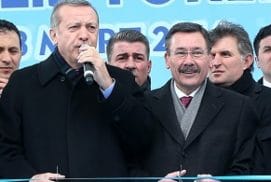
- Cristoforo Spinella 6 November 2017When Melih Gökcek was mayor of the Turkish capital of Ankara, Recep Tayyip Erdoğan appeared on the national stage as Istanbul’s highest ranking official. It was 1994 and victory in the nation’s two most important cities achieved by representatives of political Islam, marked a turning point in the balance of power in a country still largely in the hands of secular elites and governed by the army.
- Chiara Maritato 6 November 2017On October 18, Turkish Parliament passed a law allowing muftis to perform civil marriages. “Want it or not, this will be passed by the Parliament!” announced Turkish President Recep Tayyip Erdoğan in response to the opposition parties, women’s rights organisations, feminist associations and women’s right activists who have protested the bill since its draft version.
- Lea Nocera 6 November 2017A little less than a year and a half after the attempted coup d’état, the political and social situation in Turkey continues to be extremely critical. The vice on the opposition and on civil society, which in spite of everything continues the struggle in defence of democratic rights, becomes tighter every day.
- 3 November 2017After the failed coup attempt in Turkey in 2016, the AKP set about securing what Recep Tayyip Erdoğan referred to as ‘social and cultural power’. Nilgün Tutal studies processes of Islamisation in Ankara and Istanbul, showing how the political struggle in Turkey is about the imposition of a ‘legitimate’ cultural vision.
- 31 October 2017It was not very long ago that religion was regarded as a relic, at least as far as politics are concerned. Now this picture itself seems an artifact of history. With the gods once again afoot in the public square, religion has returned to occupy political actors and theorists alike. Especially salient, of course, is the nationalist brand of religious revivalism, unmistakably associated with the indiscriminate political violence that has become a fixture of contemporary life.