For decades, Latin America’s authoritarian regimes were seen as a right-wing phenomenon, with Cuba as the lone exception — a dictatorship born not from a betrayal of democracy, but of revolution. As Washington’s embargo returns to the headlines, this piece asks what that framing has long obscured: that Cuba has never had just one embargo, but two.
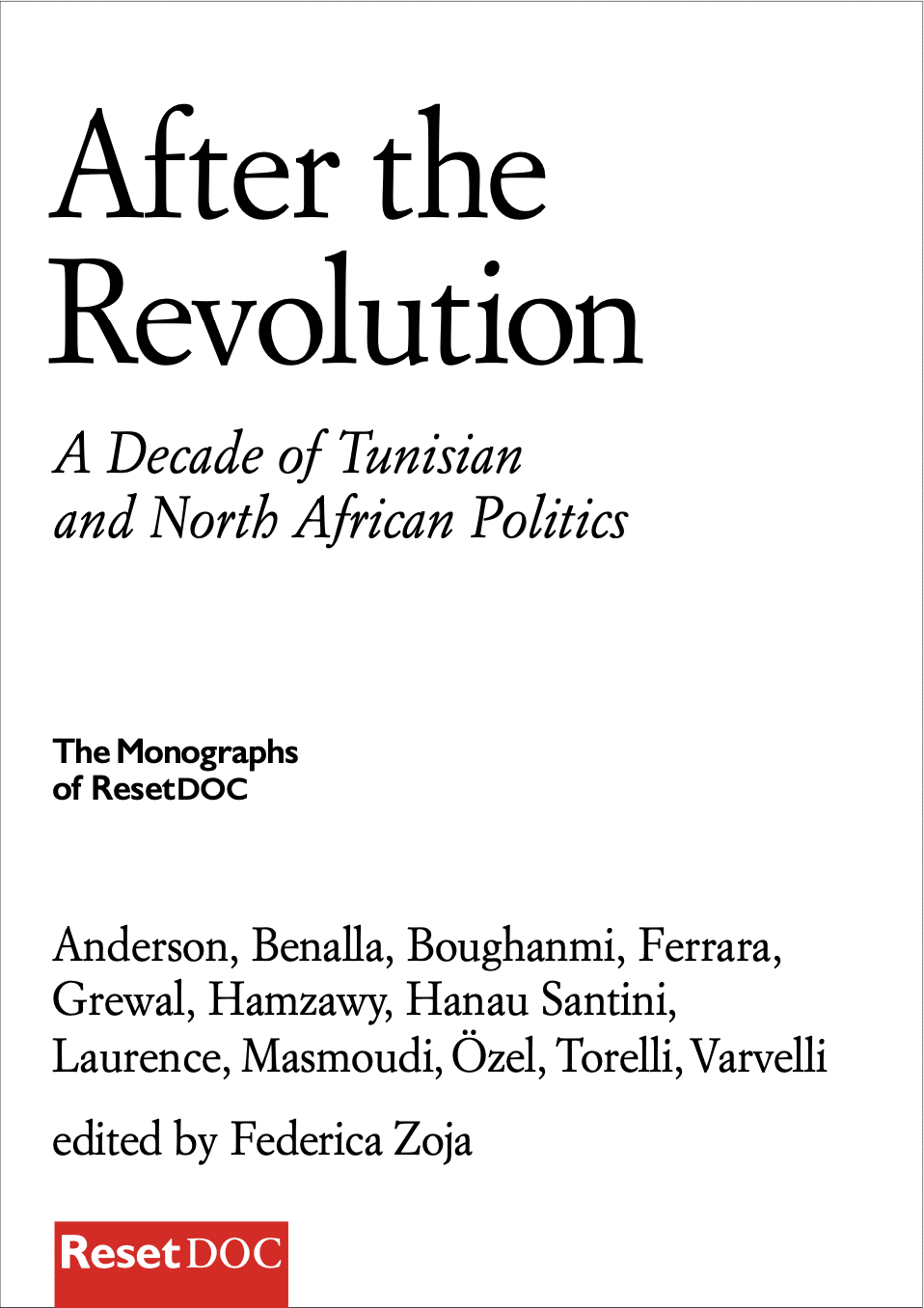
Ten years after the Arab Spring, the change promised by that fateful season has been minimal at best. The common thread moving through Arab society in this third millennium is precisely the overall feeling of incompletion, making any prospect of economic revival more dismal due to the arrival of a lethal health crisis. This timely publication, the product of a two day conference held in December 2020, aims to bring together some of the best minds in reflection on the past decade of stumbles and obstacles in the Arab world and what hope does the Tunisian Exception hold for the future.
The current political situation in Post-Soviet countries, primarily the Russian Federation, raises questions about the cultural roots of today’s prevailing nationalist political ideologies and behaviours. The international scientific community has to overcome the lack of knowledge about Russia’s Post-Soviet history, also in order to avoid the sheer repetition of old clichés – liberal -western opinions versus a despotic-eastern world
It is impossible to understand the Russia–Ukraine conflict—or to envision a path to peace—without examining the ecclesiological dimension of relations between Moscow and Kyiv. Kyiv has been regarded as the cradle of Russian Orthodoxy since the tenth century, making religious authority and identity deeply intertwined with political power in the region. In Ukraine today, over 72 percent of the population identifies as Eastern Orthodox. For decades, Ukrainian Orthodoxy was largely structured around churches linked to the Moscow Patriarchate, which rejected any ecclesiastical separation from Kyiv. This arrangement was dramatically challenged in 2018, when Patriarch Bartholomew I established the autocephalous Orthodox Church of Ukraine. Although this church now claims the allegiance of more than half of Ukraine’s Orthodox believers, it has never been recognized by Moscow.Reset DOC’s new documentary by Filippo Macelloni, “The Russia–Ukraine Conflict and the Role of the Orthodox Church”, examines how religion, identity, and geopolitics intersect at the heart of Europe’s most devastating war.
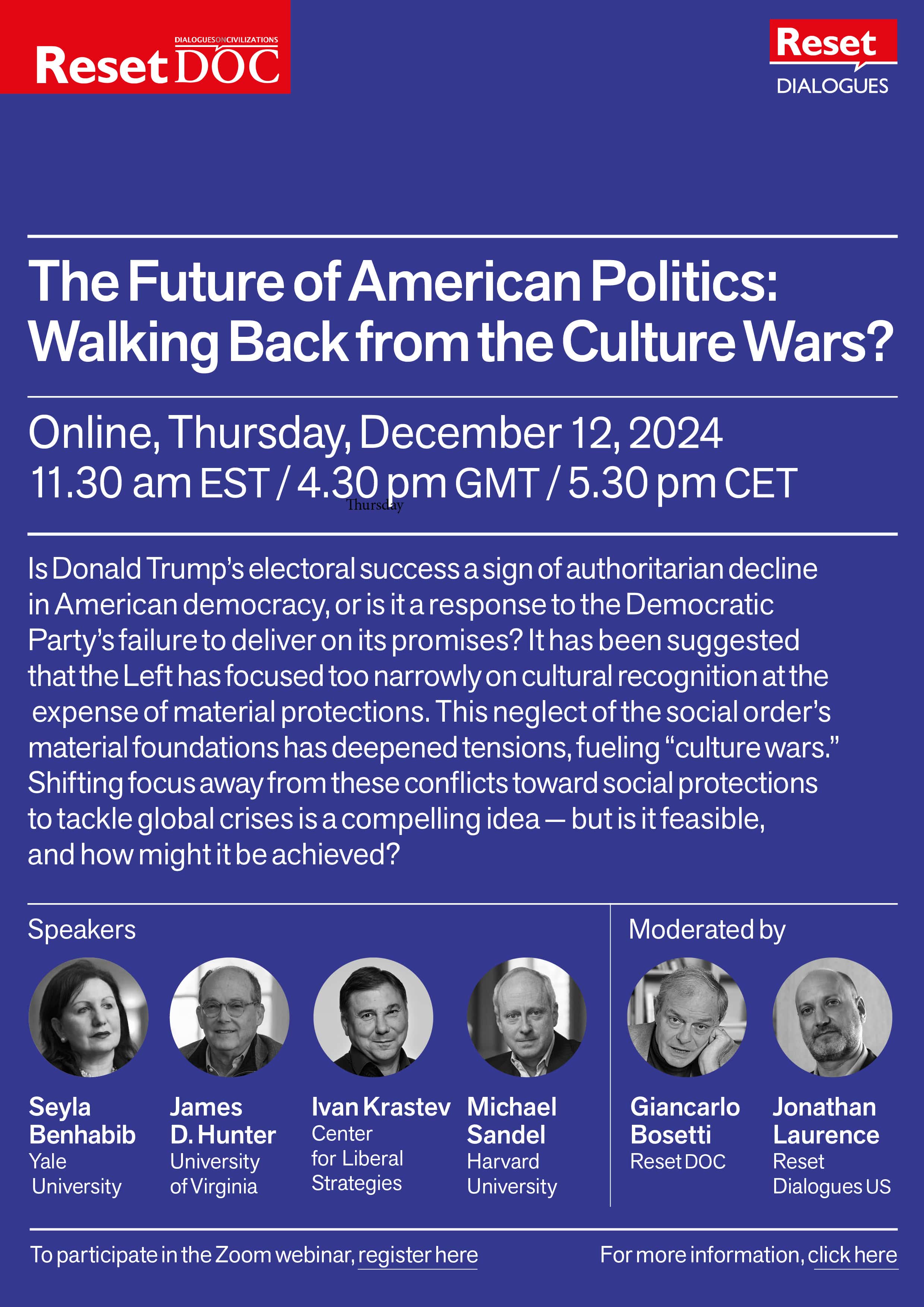
Is Donald Trump’s electoral success a sign of authoritarian decline in American democracy, or is it a response to the Democratic Party’s failure to deliver on its promises? Daron Acemoglu recently argued the latter, suggesting the Left has focused too narrowly on cultural recognition at the expense of material protections. This neglect of the social order’s material foundations has deepened tensions, fueling “culture wars.” Shifting focus away from these conflicts toward social protections to tackle global crises is a compelling idea—but is it feasible, and how might it be achieved?
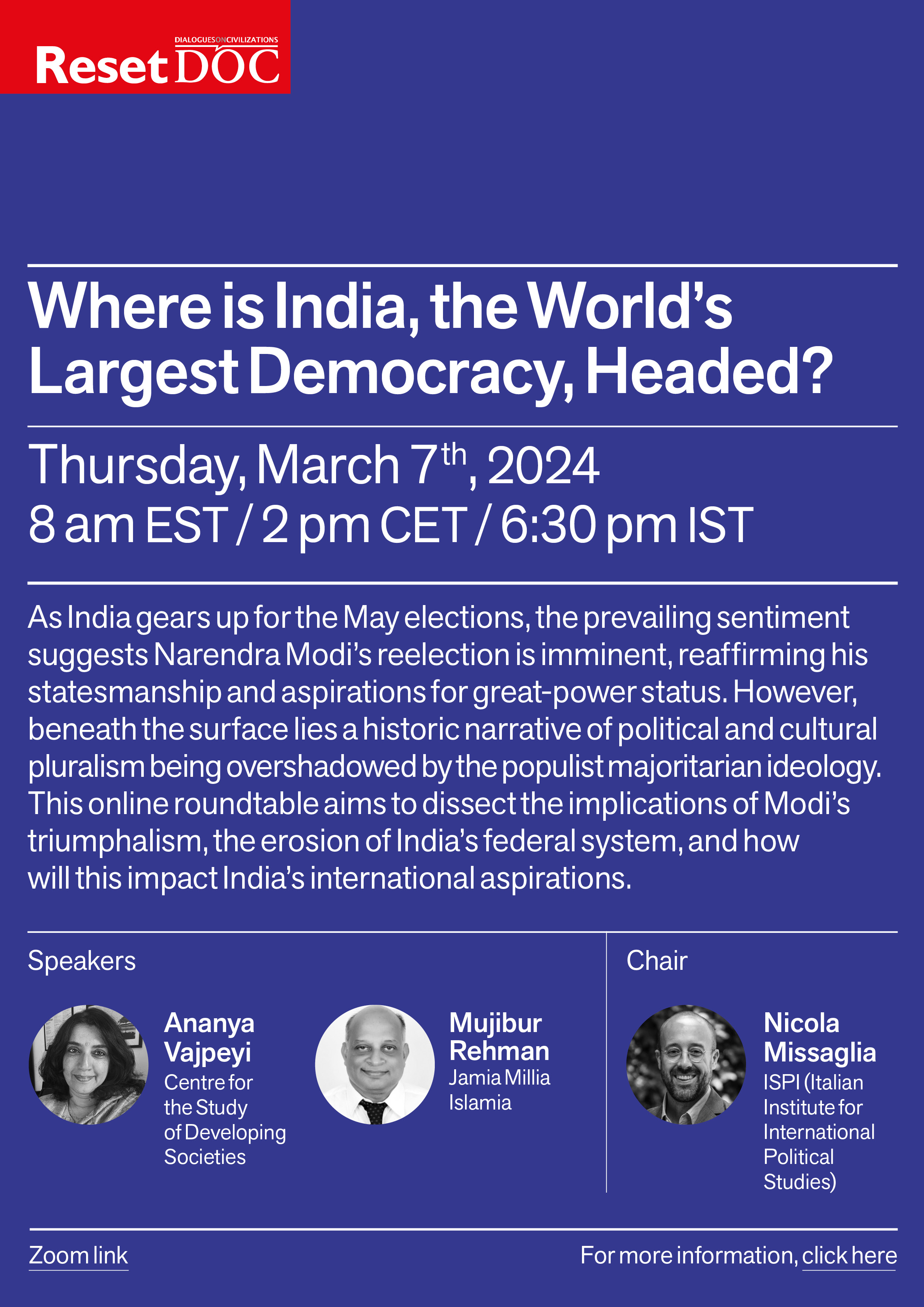
Join us on Thursday March 7th at 8 am EST / 2pm CET / 6:30pm IST to dissect the implications of Modi’s triumphalism, the erosion of India’s federal system, and how will this impact India’s international aspirations after India’s upcoming elections.
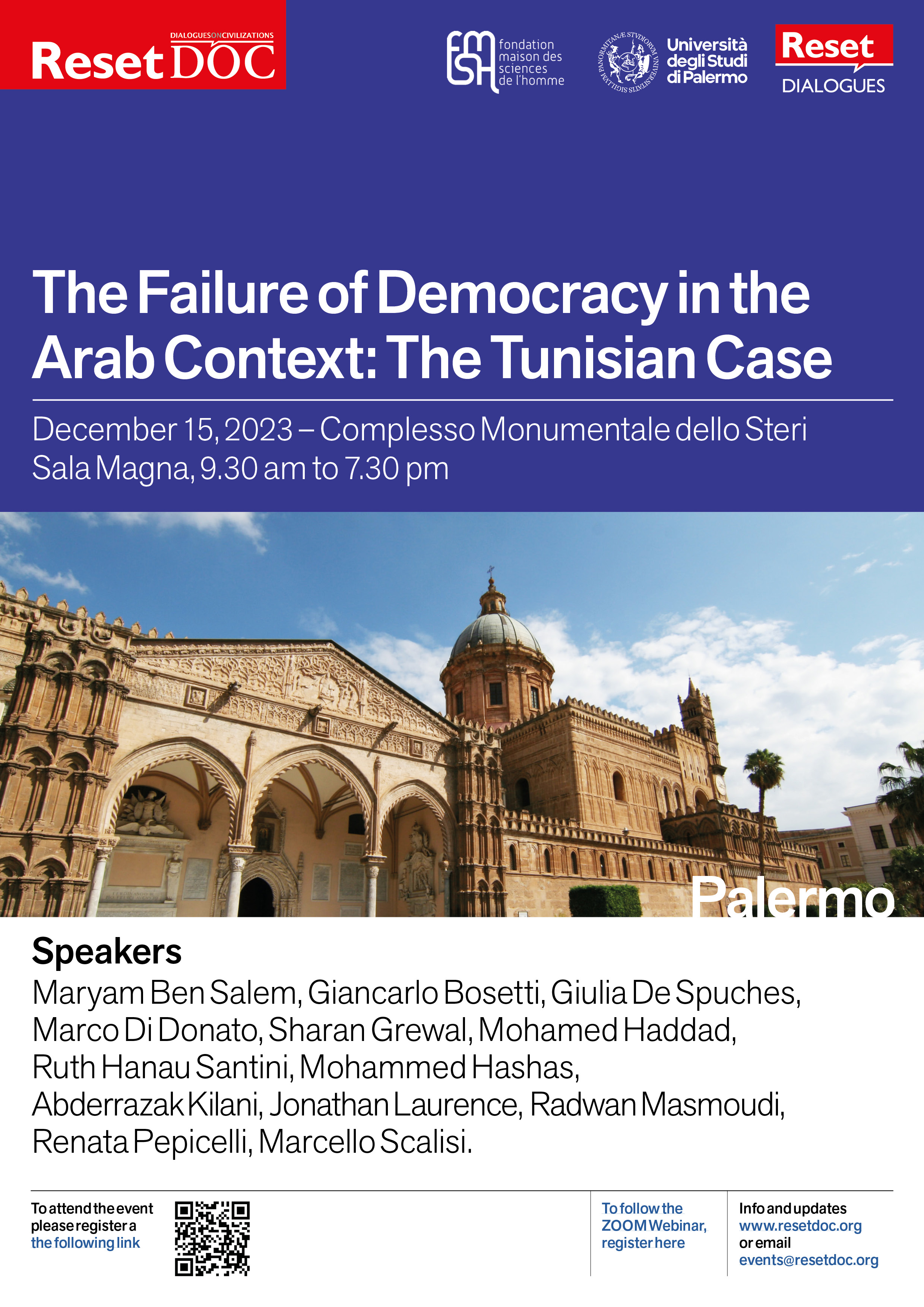
The conference will examine why democracy has struggled to take root in the Arab world: historical factors such as the consequences of oil resources, autocratic regimes, the inability to effectively implement economic reforms, the historical legacy of the alliance with the Soviet Union and the effects of colonialism, and in more recent times the negative parabola of the “Arab Springs” and in particular the failure of the compromise between Islamic and secular political forces that had made possible the beginning of a democratic path for Tunisia, now dominated by an autocratic power that arrests opponents.
We use cookies to ensure that we give you the best experience on our website. If you continue to use this site we will assume that you are happy with it.Ok