
Analyses
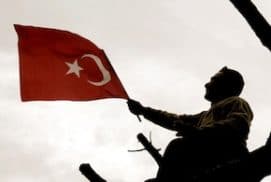
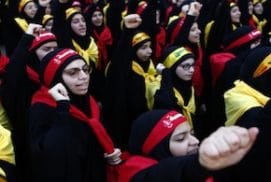
The history of the Islamic Republic of Iran—established in 1979 following the revolution that overthrew Shah Mohammad Reza Pahlavi—is marked by a dense sequence of developments that have progressively altered its political and institutional configuration. These changes, however, have only sporadically been recognized by Western analyses, which have instead tended to perpetuate a more functional and instrumental stereotype based on the image of a monolithic, highly verticalized religious autocracy. While such a characterization was broadly accurate during the first decade of the Islamic Republic, it has undergone a profound transformation since 1989.
  • Mujibur Rehman 26 June 2018
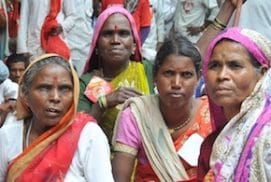
    Post-2014,  cow vigilante groups have emerged as the most prominent non-state actors in India in terms of their capacity to unleash violence. They strike at will even in regions not governed by the Bharatiya Janata Party (BJP).
  • The war in the eastern Democratic Republic of the Congo (DRC), which never makes world headlines, is by far the worst crisis in numbers of people killed and uprooted, before Syria, Yemen and other severely war-torn areas in the XXI century. It is one of three countries in the world declared a level three emergency by the United Nations.  
  • Matteo Tacconi 14 June 2018
    Following massive street protests in April against then premier Serzh Sarksyan, leader of the old regime, a general strike on May 2nd and then the election of Nikol Pashinyan, leader of the democratic movement as head of the government a week later, the Armenian revolution has vanished from daily headlines.
  • Marina Forti 7 June 2018
    Is the Iran nuclear deal dead? Perhaps not, after all, in spite of president Donald Trump’s decision to withdraw the United States from the Joint Comprehensive Plan of Action (JCPOA), as it is formally known. The US withdrawal, however, is a dangerous blow to the most important diplomatic achievement in the Middle East in many years.
  • Mujibur Rehman 29 May 2018
    The Karnataka election results once again perpetuate a disturbing trend regarding the decline of Muslim representation in various Assemblies where the Bharatiya Janata Party (BJP) has emerged a dominant force. The number of MLAs is just seven in a State where Muslims make up 12.91% of the population. The decline from 2013 is mainly owing to the BJP’s continued strategy of not fielding Muslim candidates, although it has emerged as the single largest party with 104 members.  
Load more