For decades, Latin America’s authoritarian regimes were seen as a right-wing phenomenon, with Cuba as the lone exception — a dictatorship born not from a betrayal of democracy, but of revolution. As Washington’s embargo returns to the headlines, this piece asks what that framing has long obscured: that Cuba has never had just one embargo, but two.
Analyses
-
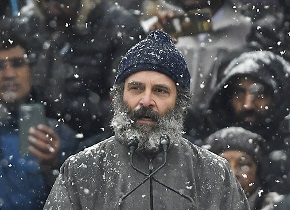
- Maria Tavernini 6 April 2023The Congress leader’s disqualification comes after the banning of the BBC’s documentary on Narendra Modi and when the Prime Minister’s relationship to billionaire Gautam Adani is under scrutiny.
- Rabii El Gamrani 31 March 2023Morocco introduced a National Strategy for Immigration and Asylum in 2014 to integrate migrants into society. A legalization campaign granted residence permits to thousands of sub-Saharan migrants. However, challenges persist, including inadequate legal instruments, unclear regularization procedures, and difficulties finding employment. The UNHCR handles asylum claims, leading to long waiting times. Tightening permit renewal conditions have left many migrants in limbo, fearing deportation. Some migrants have successfully integrated into society, but the overall management of migration remains complex, with limited local involvement and growing impatience among some Moroccans towards migrants.
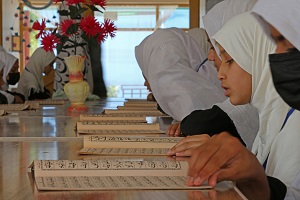
- Jocelyne Cesari 16 March 2023Since 9/11, it has gained political traction over Europe and the US to decry all types of ethnic and religious prejudice against Muslims who are not only immigrants but also citizens. In the last decade, the surge of Islamophobia has become worldwide, reaching India, China and even Muslim countries.
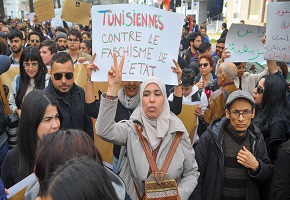
- Federica Zoja 14 March 2023Tunisia is undergoing an authoritarian pivot that seems to be taking back to a time before the Jasmine Revolution paved the way for democracy. It is not difficult to find those who recognize this trend, not only among President Kaïs Saied detractors but even among those who originally supported him. Very few, however, agree to do so in the light of day, putting their name and face to it. Once again, it’s a time for “prudence,” “risk calculation,” “always better to avoid,” because the risks of retaliation even for one’s own family members are real. Reset DOC talks with Tunisian intellectuals, Amel Grami and Zyed Krichen to gauge moods and anxieties over the future of their country in view of the instauration of the Assembly on March 15th.
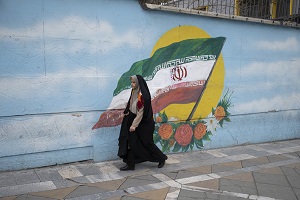
- Marina Forti 8 March 2023Iran’s street demonstrations seem to be over. Since January, the news coming from inside the country reports minimal, albeit flashy gestures: a banner hanging from an overpass, graffiti, or small impromptu demonstrations. Signs that collective anger continues to simmer
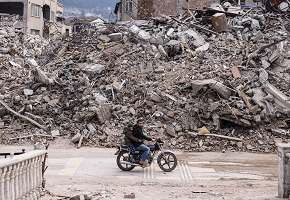
- Sofia de Benedictis 6 March 2023On February 6th, two devasting earthquakes left officially over 45 thousand dead in Turkey while the actual figure is estimated to be three to four times higher. This year Turkey is marking 100 years since the founding of the Republic in 1923 and in his most recent essay, The Turkish Malaise, Cengiz Aktar, argues that a combination of factors have led to its current sorry state, which first and foremost is due to the fact that modern Turkey has never faced the sins of its past, and ignoring them has led to Erdogan’s swing towards totalitarianism and kleptocracy over the last 10 years.
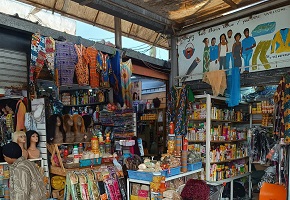
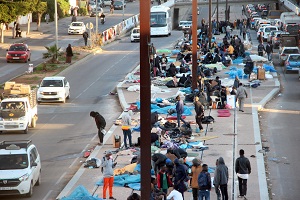
- Rabii El Gamrani 13 February 2023On one of Casablanca’s busiest thoroughfares and in the adjacent and centrally located Ouled Ziane bus station, in the construction site of the tracks of the third tram line, hundreds of sub-Saharan citizens camp out day and night, consuming their lives waiting and idle and living on handouts and gimmicks. They are so-called transit migrants whose goal – unlike other sub-Saharan nationals who have chosen to settle in Morocco – is to reach the other side of the Mediterranean.
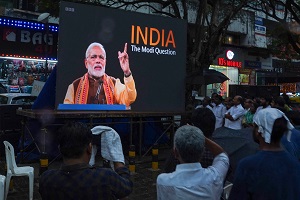
- Maria Tavernini 10 February 2023India’s ruling Bhratiya Janata Party has blocked “The Modi Question”, the documentary on Prime Minister Narendra Modi’s role in the 2002 Gujarat riots.
- Nicole Hamouche 1 February 2023“Art is before anything, the confrontation with one’s destiny”, wrote the Lebanese poet, Nadia Tuéni. And the Lebanese have had indeed no choice but to confront their destiny. Against all odds, the last years of repression and depression, marked by the October 2019 revolution, the port’s blast, and the financial crisis, have given rise to a buoyant creativity in all forms.