Analyses
The history of the Islamic Republic of Iran—established in 1979 following the revolution that overthrew Shah Mohammad Reza Pahlavi—is marked by a dense sequence of developments that have progressively altered its political and institutional configuration. These changes, however, have only sporadically been recognized by Western analyses, which have instead tended to perpetuate a more functional and instrumental stereotype based on the image of a monolithic, highly verticalized religious autocracy. While such a characterization was broadly accurate during the first decade of the Islamic Republic, it has undergone a profound transformation since 1989.
  • Balša Lubarda 6 November 2023
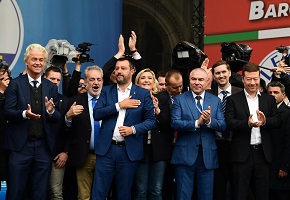
    Today, the headlines warn us of the “rising far right” and the “increasing influence of the far right on contemporary politics.” Indeed, the far right has been effectively mainstreamed as a set of talking points operating in the contemporary debates on politics and society. Proof is to be found virtually on a daily basis across different political and geographical contexts, ingrained in the statements and policies of the (presumed) center-right but even the left.
  • Simone Disegni 6 November 2023
    Almost a month after the Hamas attack on Israel, the Middle East is on the verge of a political, military and social explosion. Europe and the West are not immune; very serious, high-risk lines of tension are slowly reappearing. If this happens, it will be because precise political wills have constructed and disseminated for decades a distorted and poisonous rhetoric to which millions of people are enslaved, often in spite of themselves. So much so that the power of these narratives can easily overwhelm the objectivity of facts, even their relevance.
  • Ilaria Romano 30 October 2023
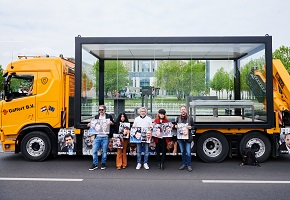
    Tunisia faces challenges managing a surge in refugees and migrants, with 11,000 registered by the UNHCR, making it a major departure point for those heading to Europe. The country lacks proper infrastructure for immigration, providing minimal support to registered migrants. The EU signed a Memorandum of Understanding to address the issue, but obstacles and human rights concerns persist, with Tunisia rejecting the first EU aid installment.
  • Gaetano Pentassuglia 27 October 2023
    As the level of brutality of the Hamas-Israel conflict further intensifies, and its effects become measured by the scale of defiance of international humanitarian and criminal law, it is vitally important that we retain the intellectual ability to step back from the horrors of the current confrontation and reflect on two fundamentals that must define any conversation on any type of settlement over the long term. One is Israel’s right to exist within secure borders under international law; the other is the equally sacrosanct legal right of the Palestinian people to self-determination.
  • Assaf Sharon, a philosophy professor at the University of Tel Aviv and founder of the Center for the Renewal of Israeli Democracy, discusses the complex interplay between Israeli politics, security challenges, and populism in the wake of recent events. Talking to Reset DOC, he addresses the weakening of democratic values, the credibility of the Israeli government, and the prospects for a two-state solution in the Israeli-Palestinian conflict.
  • Hussein Ibish 20 October 2023
    Hamas obviously thinks that if it wants to take over the Palestinian movement, it needs another sustained insurgency against Israeli occupation. Hamas is hoping to lure the Israeli military back into the interior of Gaza for the urban combat that favors insurgent groups. Hamas hopes a sustained insurgency can eventually result in a steady drip of killed and captured Israeli conscripts, allowing Hamas to claim that it alone is actively fighting for Palestine. What this means is that in trying to fulfill the pledge to “eliminate Hamas,” Israel could well deliver everything Hamas is counting on.
  • Fabio Turco 20 October 2023
    Poland has undergone a significant political shift, as populist-driven governance yields to a democratic left majority. Mass protests, catalyzed by a controversial abortion law change, played a crucial role in this transformation, igniting participation among young voters. The election’s outcome also signifies Poland’s choice to reconcile with the European Union, bringing challenges like restoring the rule of law and securing vital EU funds. Cohesion among the diverse opposition is crucial to sustaining change. While Poland embarks on this new path, neighboring Slovakia witnesses a populist resurgence with Robert Fico’s victory, raising concerns about foreign policy and immigration.
Load more
SUPPORT OUR WORK


Please consider giving a tax-free donation to Reset this year

Any amount will help show your support for our activities

In Europe and elsewhere
(Reset DOC)


In the US
(Reset Dialogues)


x