Analyses
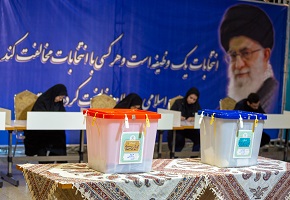
The history of the Islamic Republic of Iran—established in 1979 following the revolution that overthrew Shah Mohammad Reza Pahlavi—is marked by a dense sequence of developments that have progressively altered its political and institutional configuration. These changes, however, have only sporadically been recognized by Western analyses, which have instead tended to perpetuate a more functional and instrumental stereotype based on the image of a monolithic, highly verticalized religious autocracy. While such a characterization was broadly accurate during the first decade of the Islamic Republic, it has undergone a profound transformation since 1989.
  • Fabio Turco 22 December 2023
    2023 saw a major shakeup in Central and Eastern Europe. Two elections reshuffled the board in the Viségrad group, where Viktor Orban’s Hungary now remains the only constant for the last ten years. Let’s take a look at what happened and what the prospects are for the coming year. The biggest turnaround comes from the region’s most important country, Poland. Elections on 15 October saw the end of the conservative, nationalist Law and Justice (PiS) government, which was replaced by a center-liberal-progressive coalition led by Donald Tusk. His return to government – he previously served as prime minister from 2007 to 2014 – marks a 360-degree turn in Warsaw’s politics, which is re-aligning with Brussels after eight years of troubled relations.
  • T. Deniz Erkmen 21 December 2023
    In the summer of 2023, an ominous phenomenon spread like wildfire from province to province in Turkey: the cancellation of music festivals and concerts. Just days before they were supposed to take place and generally at the request of public authorities such as mayors or governors, concerts and entire festivals were cancelled one by one. These repeated and continuous acts of cancellation, which started in the summer of 2022 and continued in 2023, generally do not make it to the international news.
  • Selcen Öner 19 December 2023
    Although the far-right parties mostly hold Eurosceptic positions, especially before the 2019 European elections, most of them changed their rhetoric and began to emphasize that they would seek more influence within the EU institutions, aiming to transform the EU into a “Europe of nations.” These parties use the European level to increase their visibility and legitimacy by being part of a political group in the European Parliament (EP). In addition to these, we have seen the normalization of far-right-center-right coalitions. Meanwhile, there has been a radicalization of the mainstream, particularly center-right parties. These political trends at the national level may also have implications at the European level, which could be reflected in the upcoming European elections in 2024.
  • Seán Golden 6 December 2023
    In the 1920s, the incipient democratic government of the newly independent Irish state managed to disarm the guerrilla forces that had fought the War of Independence by offering them the chance to become members of the new Irish police force in return for surrendering their weapons, thereby guaranteeing the state’s monopoly on violence. This means that Ireland is now faced with the dilemma of how to respond to right-wing violence while respecting the values of liberty.
  • Kamal Tasiu Abdullahi 27 November 2023
    The recent coup in Niger, which took place on July 26, 2023, is just the latest episode in a series of events that have sent shockwaves through the region and left governments and international actors scrambling to respond. Niger, a country that experienced a relatively fair democratic transition in 2021 with the election of Mohamed Bazoum as president, has once again descended into chaos.
  • Seyla Benhabib 15 November 2023
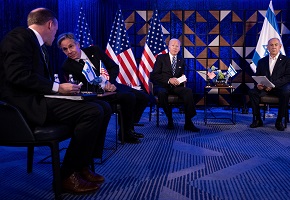
    October 7, 2023 is not just a turning point for Israel and the Jewish diaspora; it must be a turning point for the Palestinian struggle. The Palestinian people must free themselves of the scourge of Hamas. The acts of violence by Hamas do not only constitute war crimes and crimes against humanity; they also reveal that Islamic Jihadi ideology, which revels in the imagery of violence, which has overtaken the movement.
  • Israel’s actions in no way justify anti-Semitic reactions, especially not in Germany. It is intolerable that Jews in Germany are once again exposed to threats to life and limb and have to fear physical violence on the streets. The democratic ethos of the Federal Republic of Germany, which is orientated towards the obligation to respect human dignity, is linked to a political culture for which Jewish life and Israel’s right to exist are central elements worthy of special protection in light of the mass crimes of the Nazi era.
Load more
SUPPORT OUR WORK


Please consider giving a tax-free donation to Reset this year

Any amount will help show your support for our activities

In Europe and elsewhere
(Reset DOC)


In the US
(Reset Dialogues)


x