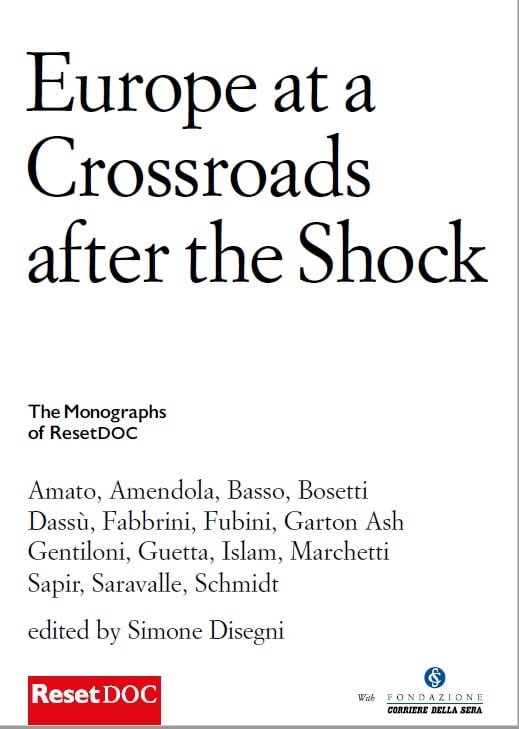
With 2020 coming to a close and the European approval for the Covid-19 vaccines, we are starting to see a dim light at the end of the tunnel. Although it may still seem distant, the European Union is looking to rebuild a decimated economy and reposition itself on the global stage. A two-day conference held this autumn, organized in collaboration with the Fondazione Corriere della Sera, brought together world-renowned experts to look at what possible futures exist for the EU and will a Biden presidency be able to rebuild much of what was lost under Trump in the way of trans-atlantic relations. Our latest e-book collects original pieces based on the conference proceedings and as well as exclusive interviews with Giuliano Amato, Enzo Amendola, and Paolo Gentiloni.
It is impossible to understand the Russia–Ukraine conflict—or to envision a path to peace—without examining the ecclesiological dimension of relations between Moscow and Kyiv. Kyiv has been regarded as the cradle of Russian Orthodoxy since the tenth century, making religious authority and identity deeply intertwined with political power in the region. In Ukraine today, over 72 percent of the population identifies as Eastern Orthodox. For decades, Ukrainian Orthodoxy was largely structured around churches linked to the Moscow Patriarchate, which rejected any ecclesiastical separation from Kyiv. This arrangement was dramatically challenged in 2018, when Patriarch Bartholomew I established the autocephalous Orthodox Church of Ukraine. Although this church now claims the allegiance of more than half of Ukraine’s Orthodox believers, it has never been recognized by Moscow.Reset DOC’s new documentary by Filippo Macelloni, “The Russia–Ukraine Conflict and the Role of the Orthodox Church”, examines how religion, identity, and geopolitics intersect at the heart of Europe’s most devastating war.
This international conference will address the critical challenges facing liberal democracies. It will explore their failure to respond effectively to the anxieties and needs of citizens grappling with globalization, precarious employment, demographic changes, and social dislocation. These issues, amplified by populist rhetoric and the perceived indifference of liberal elites, have led to growing polarization, weakened societal cohesion, and ideological stagnation in politics.
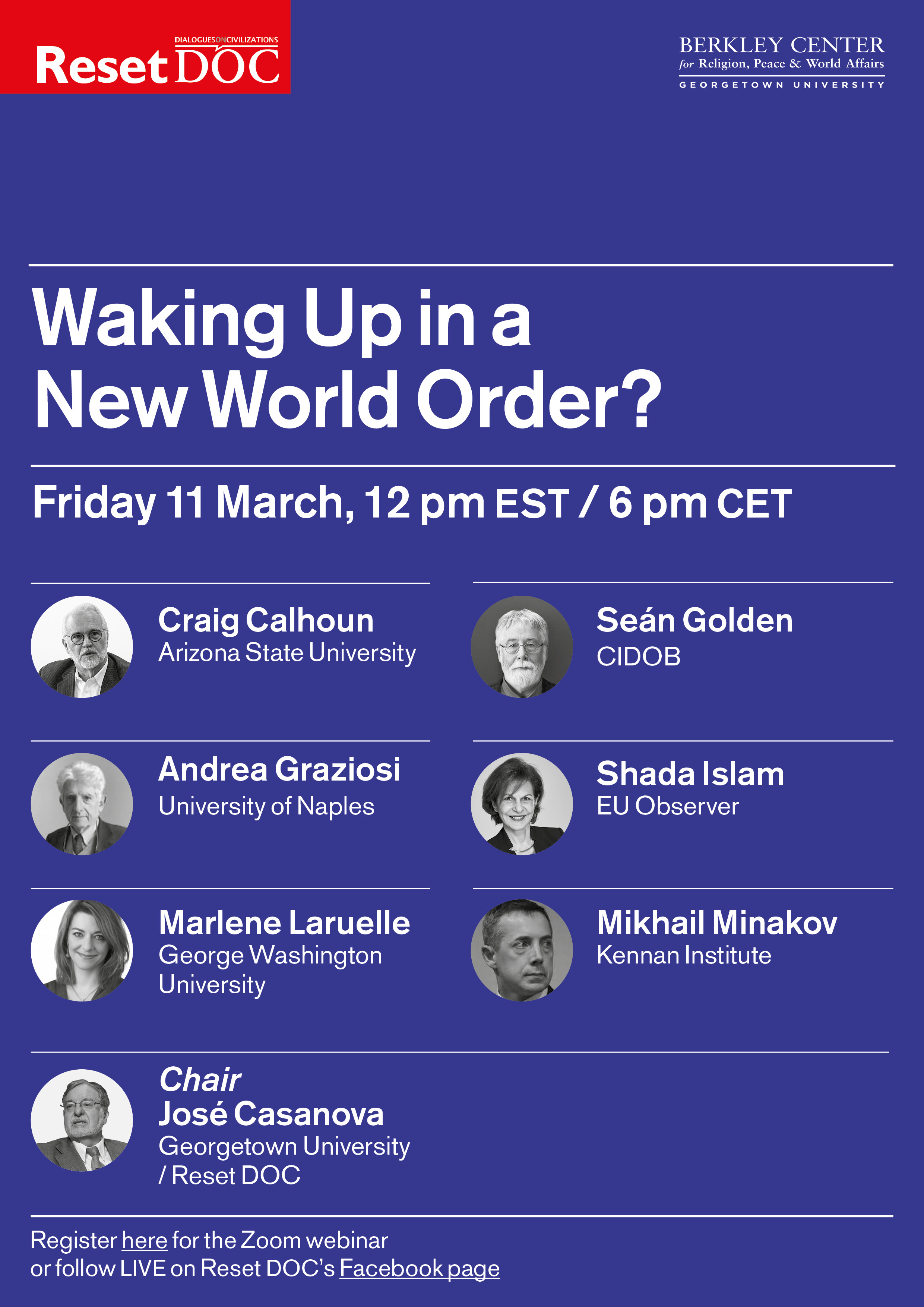
Join us online for a momentous virtial roundtable on Friday 11 March at 12pm EST / 6pm CET – With José Casanova, Craig Calhoun, Sean Golden, Andrea Graziosi, Shada Islam, Marlene Laruelle, Mikhail Minakov
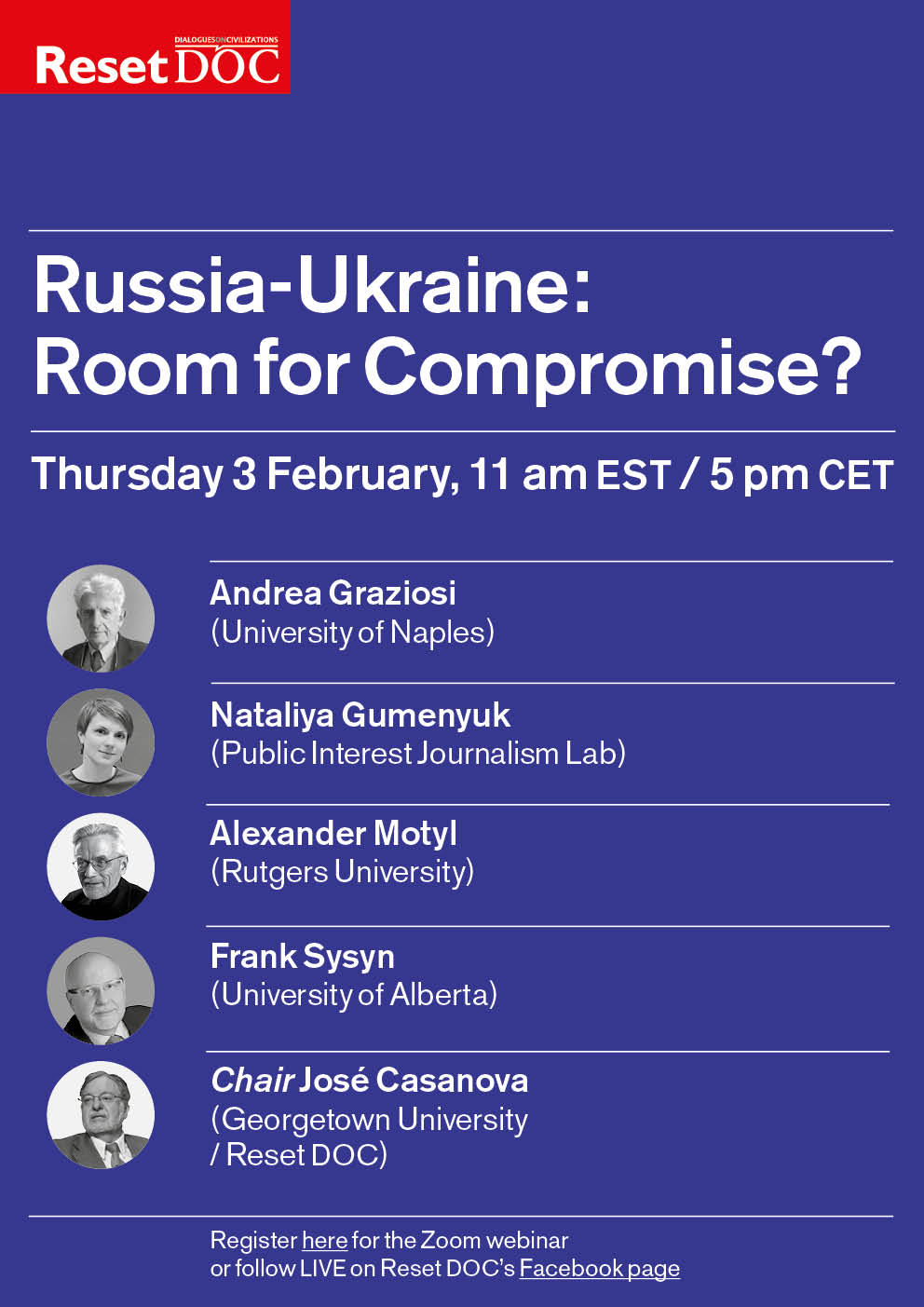
A dark air of impending war hangs once again over Eastern Europe. As Russia amasses thousands of troops on the Ukrainian border and brings its demands for NATO “security guarantees” to a new level, there is fear that the situation on the ground may escalate at any time into open military confrontation. This panel, featuring world-renowned experts on post-Soviet geopolitics, will seek to unpack those very underlying conditions, and find out if and how there is any room to be had for political compromise.
SUPPORT OUR WORK
Please consider giving a tax-free donation to Reset this year
Any amount will help show your support for our activities
In Europe and elsewhere (Reset DOC)
In the US (Reset Dialogues)
x
We use cookies to ensure that we give you the best experience on our website. If you continue to use this site we will assume that you are happy with it.Ok