Analyses
The history of the Islamic Republic of Iran—established in 1979 following the revolution that overthrew Shah Mohammad Reza Pahlavi—is marked by a dense sequence of developments that have progressively altered its political and institutional configuration. These changes, however, have only sporadically been recognized by Western analyses, which have instead tended to perpetuate a more functional and instrumental stereotype based on the image of a monolithic, highly verticalized religious autocracy. While such a characterization was broadly accurate during the first decade of the Islamic Republic, it has undergone a profound transformation since 1989.
  • Nasr Abu Zayd interviewed by Nina zu Fürstenberg 12 July 2010
    From Reset-DoC’s Archive – Within the framework of the in-depth analysis that Reset devotes to the subject of liberal Islam, we wish to present an interview with the Egyptian thinker Abu Zayd, who is one of the most respected and influential Muslim reformists. Abu Zayd explains that, contrary to widespread belief, within the Muslim world there are many reformists and organisations that spread the principles of liberalism, equality, democracy and human rights. Unfortunately, however, the West appears not to acknowledge this and instead of contributing to strengthen these tendencies, it tends to emphasise Islam’s negative aspects and, in particular, its links with terrorism. The problem – continued Abu Zayd – does not lie in Islam or in the Koran, but rather in the stubbornness that characterises extremists in interpreting the Holy Book in a rigid and literal manner, without allowing for any kind of critical debate. Applying hermeneutics to the Koran would instead facilitates its understanding and a more current interpretation, opening the way to a modernisation of the text without corrupting its sacredness. (This interview was published by Reset-DoC in June 2010)
  • Giancarlo Bosetti 6 July 2010
    Nasr Hamid Abu Zaid upheld the belief that the Koran is a book passed down through oral communication and one destined to poetic recitation. He was a believer and, as a Muslim, accusations of apostasy offended him profoundly. Should the conquering of democracy ever be achieved in the entire Muslim world, the history that will be written will have to linger at length on this small man with his frail health.
  • Federica Zoja 16 June 2010
    In a decisive year for the Egyptian political system, seriously tested by a tight electoral calendar and by the uncertainty of presidential succession, there has been a rise in the popularity of a new man, Mohammed El Baradei, now retired from his international appointments (the most prestigious, from 1997 to 2009 as the Director of the United Nations’ International Atomic Energy Agency in Vienna) and now in the front line for reforming his country. He appears, however, to worry the opposition more than the majority.
  • Marcella Emiliani talks to Ernesto Pagano 10 June 2010
    President Obama “has not lifted a finger” for the Middle Eastern peace process according to a caustic Marcella Emiliani, expert on the Middle East and associate professor at Bologna University. In spite of the media uproar, the Israeli blitz on the “Freedom Flotilla” has revealed the entirety of the White House’s inability, and that of the whole international community, to restart the peace process. And while Turkey “draws dangerously close to Iran,” the Israeli government, “accustomed to never-ending international isolation,” continues to “move forward on its own path.”
  • 20 May 2010
    Racism, the symbols of Islam, the relationship between Europe and the Muslim community were at the centre of the first day of the third edition of the Istanbul Seminars, the yearly conference organised by Resetdoc at the Bilgi University. Giancarlo Bosetti, Reset’s editor-in-chief, opened the sessions, reminding everyone how fear has become the main instrument of governments in applying pressure on society’s weaker and more easily influenced groups to incite hostile sentiments such as xenophobia and racism. Nilüfer Göle, chair of the Faculty of Sociology at the Ecole des Hautes Etudes in Paris, instead analysed the perverse perspective according to which, for many westerners, minarets symbolically represent missiles and veiled women are an omen of the imposition of Shari’ a in Europe. An article by Marco Cesario.
  • Nina zu Fürstenberg 11 May 2010
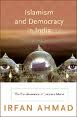
    How the Jamaat-e-Islami developed and transformed itself within the boundaries of a modern pluralistic democracy, the Indian democracy, is the subject Irfan Ahmed has devoted his research to. To write this book, Irfan Ahmad conducted extensive fieldwork in several small Muslim towns near Delhi, and he describes the gradual process of change and openness, following in particular the development within Jamaat’s universities and their student organisations SIMI and SIO.
  • Richard J. Bernstein, New School for Social Research 1 May 2010
    In many discussions of multiculturalism there is a ‘picture’ that holds up captive—a picture of cultures, religious or ethnic groups that are self-contained and are radically incommensurable with each other. I explore and critique this concept of incommensurability. I trace the idea of incommensurability back to the discussion by Thomas Kuhn—and especially to the ways in which his views were received. Drawing on Gadamer’s understanding of hermeneutics, I argue that the very idea of radical incommensurability is incoherent. This does not entail an abstract universalism but rather sensitivity to the ways in which all languages and cultures are in principle open to the real possibility of enlarging one’s vision and mutual understanding.
  • Andrew Arato, New School for Social Research 1 May 2010
    This short paper will seek to explore the causes, and possible solutions of what seems to be the current freezing of the Turkish constitution making process, that has had some dramatic successes in the 1990s and early 2000s. After my previous work, comparing the major forms of modern constitution making that claim to be democratic, I have come to the conclusion that it is the legitimacy problem (rather than choice of specific model) that represents the level on which the normative justification of each process, and at least the short term chances of its success in a divided society should be tested. As a result, I make the strong claim that democratic legitimacy or constituent authority should not be reduced either to any mode of power, even popular power, or to mere legality. It is these types of reduction that I find especially troubling in recent Turkish constitutional struggles, where the legal claims of two powers, of the government controlled legislative and of the judicial branches to structure the constitution are not backed by sufficient political legitimacy. In effect these two powers that claim their constituent authorization, rather implausibly in my view, from either the democratic electorate or from an original constituent power, because of their conflict threaten to freeze the constitution making process that very much needs to be continued and concluded. I end the paper by making a suggestion for one possible constitution making procedure that would be both legitimate and legal.
  • Fred Dallmayr 8 April 2010
    «As we read in Matthew 5:13, religious believers are told: “You are the salt of the earth.” The phrase means that religious believers are expected to be neither identical with the “earth”, nor to be removed from it. In this sense, they are meant to be neither worldly-secular nor radically anti-worldly or anti-secular (thus perhaps post-secular).»
  • Matteo Tacconi 19 October 2009
    Without tacit approval from the Soviet Union, 1989 would never have happened. There would have been no peaceful and democratic mass revolts that resulted in the fall of the Berlin Wall. It is thus to Moscow, at the centre of the communist empire, that one must look, if wishing to examine the now two-decade-old epoch-making changes. An unexpected, sudden and phenomenal change that led the Eastern regimes to collapse one after the other. Two years later the Soviet Union also imploded and Mikhail Gorbachev lost his battle. We discuss these events with Andrea Graziosi, Professor of Contemporary History at the Federico II University in Naples, President of the Italian Society for the Study of Contemporary History and author of two scholarly books on Soviet history published by Il Mulino; Lenin and Stalin’s USSR and The USSR from triumph to collapse. An interview by Matteo Tacconi.
Load more
SUPPORT OUR WORK


Please consider giving a tax-free donation to Reset this year

Any amount will help show your support for our activities

In Europe and elsewhere
(Reset DOC)


In the US
(Reset Dialogues)


x