Analyses
The history of the Islamic Republic of Iran—established in 1979 following the revolution that overthrew Shah Mohammad Reza Pahlavi—is marked by a dense sequence of developments that have progressively altered its political and institutional configuration. These changes, however, have only sporadically been recognized by Western analyses, which have instead tended to perpetuate a more functional and instrumental stereotype based on the image of a monolithic, highly verticalized religious autocracy. While such a characterization was broadly accurate during the first decade of the Islamic Republic, it has undergone a profound transformation since 1989.
  • Roberto Toscano 5 March 2012
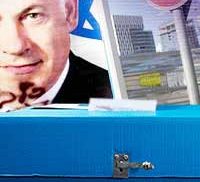
    Elections in Iran have always had a contradictory meaning. On one hand, they have always been less than free and fair, even when the polls were basically correct, (meaning not materially rigged), because of the vetting of candidates by the Guardian Council. On the other, they have been a flexible mechanism measuring the relative strength of the different components of the regime. Not a democracy, certainly, but a sort of pluralistic oligarchy.
  • Brahim El Guabli 13 February 2012
    Two months have elapsed since the Moroccan premature parliamentary elections of November 25th gave an unprecedented victory to the Islamist Justice and Development Party (PJD). The latter won 25% of the seats of the 295 seats of the Moroccan parliament. A victory that many observers of the Moroccan and Maghrebi affairs considered historic, given the unprecedented transparency, and quasi-total impartiality of the “Mother of Ministries”—the nickname of the Interior Ministry during the reign of Driss Basri because of its octopus-like shape and involvement in every aspect of the Moroccans’ life—who supervised these elections. Despite some activists’ lamentation of the negative impartiality of the authorities, none cast any serious doubt on the honesty of their results. This article endeavors to answer some of the pressing questions about the Moroccan political paysage in order discuss the internal circumstances and political calculations that forced the Makhzen—the street name of the whole regime—to cohabit with the victory of PJD despite the relentless war the same regime is waging against the Sufi Justice and Charity Brotherhood. We will also try to see the ability of a PJD-led coalition to effectuate the political change desired by the majority of citizens in the country. [1]
  • Andrea Dessì 10 February 2012
    The political landscape of the Arab world has been dramatically transformed by the events of 2011. After decades of sterile politics and engrained authoritarianism Tunisia, Egypt, Libya, Yemen and Syria have embarked on a courageous journey aimed at fostering inclusive societies based on the rule of law and accountable governance. While we are only at the beginnings of what will be a long and arduous process, it is hard to believe that things will ever go back to the way they were. From Morocco to Bahrain the Arab public is on the march, and representation through elections is what they demand.
  • Francesca Bellino 15 January 2012
    The revolutionary atmosphere is everywhere in Tunisia. According to some, the real revolution has only just begun, and in the widespread chaos, there are many who have clear ideas both about the future and about Tunisia’s identity. It is sufficient to glance at Facebook, where on many ‘walls’ one can read messages such as: “We are Muslims not Islamists.” “We are moderates and not extremists.” “We dream of democracy.”
  • Antonella Vicini 15 January 2012
    “Major combat operations in Iraq have ended. In the battle of Iraq, the United States and our allies have prevailed. And now our coalition is engaged in securing and reconstructing that country.” It was May 1st 2003 when, speaking these words on board the USS Abraham Lincoln, President George W. Bush declared the end of military operations in Iraq and began to talk about security and reconstruction. So-called reconstruction soon revealed its darker aspects: car bombs and sectarian clashes, Abu Ghraib and a still impassable Green Zone surrounded by a T-wall.  
  • Francesco Aloisi de Larderel 15 January 2012
    From the very first weeks it began to be apparent that the SCAF was increasingly hostile to the reform movement and to the many organisations that occupied Tahrir square and demonstrated in favour of social justice, individual rights and democracy. Confronted with demonstrations, calls for immediate and radical reforms and trials of members of Mubarak’s regime – that certainly worried part of the Egyptian public opinion – the SCAF presented itself as a bastion of stability, taking a leaf from the book of the regime of the now deposed President Mubarak. This growing tension between the SCAF and the Tahrir square demonstrators soon produced ugly results, in terms of a very high number of arrests, trials before military courts, assaults to the demonstrators, and an increasing number of casualties.
  • 1 January 2012
    By Giancarlo Bosetti Nilüfer Göle, a Turkish intellectual born in Ankara in 1953, is a world-renowned authority on Turkish and Muslim sociology. She began her studies in Turkey and completed them in Paris under Alain Touraine. After completing her doctorate in France, she became a professor at Boğaziçi University, then returned to the École des Hautes Études en Sciences Sociales as the director of studies, dividing her life between Paris and Istanbul, where her husband, economist Asaf Savas Akat, teaches at Bilgi University.
  • 10 December 2011
    By Nicola Missaglia Seyyed Mohammad Khatami, famous for having been the fifth president of the Islamic Republic of Iran between 1997 and 2005, is an Iranian Shiite intellectual, philosopher and theologian who belongs, without doubt, to the varied world of Islamic reformism.
  • Ferhat Kentel (Sehir University, Istanbul), interviewed by Nicola Mirenzi 30 November 2011
    The Kurdish conflict has re-emerged as a key issue in Turkey. On October 19th the Kurdistan Workers Party, or PKK, inflicted an extremely violent attack on the Turkish state, killing 24 soldiers (the highest number of victims in the past few years) in the southeast. The AKP government’s reaction to the event was extremely harsh. Turkish President Abdullah Gül promised to “reduce to the same tears” those who had carried out the attacks. And that is what happened. Ankara launched a massive attack not only in Southeast Turkey but also across the border into northern Iraq, where the Turkish governments says Kurdish separatists take refuge and organize their attacks. To understand the recent flare-up in the conflict and its links to Turkey’s constitutional re-writing process, Resetdoc spoke to Professor Ferhat Kentel, a sociologist at Sehir University in Istanbul.  
  • Brahim El Guabli 22 November 2011
    Civil society has many roles to play in the few months and years to come in order to keep the democratic momentum in the country, and also keep conviction alive among the youth that democracy is a national need. Democracy does not need regimes; regimes need democracy because it is their only way to stay abreast of the legitimate aspirations of their people and be responsive to them. The highly dynamic and active Moroccan civil society can help in implementing the new constitution and protecting this achievement through: playing their role of watchdog, doing more grassroots activism against corruption and political malpractice, spearheading the political cultural change, fighting all forms of abuse of power and advocating for social justice in the country.Photo by Vesna Middelkoop (cc)
Load more