
Analyses
The history of the Islamic Republic of Iran—established in 1979 following the revolution that overthrew Shah Mohammad Reza Pahlavi—is marked by a dense sequence of developments that have progressively altered its political and institutional configuration. These changes, however, have only sporadically been recognized by Western analyses, which have instead tended to perpetuate a more functional and instrumental stereotype based on the image of a monolithic, highly verticalized religious autocracy. While such a characterization was broadly accurate during the first decade of the Islamic Republic, it has undergone a profound transformation since 1989.
  • Roger Friedland and Janet Afary 19 February 2013
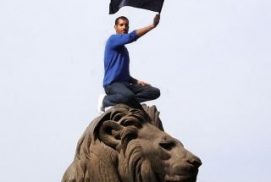
    The body politic is at risk in Egypt. On the second anniversary of the Egyptian revolution — Jan. 25 — in a demonstration in Tahrir Square, a woman protester was violently set upon by a mob of men who grabbed at her private parts, pulling and pushing her from person to person until she was finally and with great difficulty rescued by teams of anti-harassment male activists. The roiling crowd circling around its prey was captured on video. She was not the only victim that night: Eighteen other incidents were also reported. And this was not the first time women protesters — and reporters — have been attacked by crowds of men in such demonstrations, their clothing ripped off, men’s fingers reaching inside their underwear.
  • Giuseppe Acconcia 12 February 2013
    Iran, 14 June’s next Presidential elections are upon us. And, in Tehran there is a confrontation between conservatives close to the Supreme Leader and  hardliners backed by the outgoing President-in-office, Mahmoud Ahmadinejad. The space is too small for other fronts. Iranian reformists remain excluded from political life with two of their leaders, Moussavi and Karroubi, key players of the anti-regime protests in 2009, still blocked under house arrest. Yet, this time above all tensions could be caused by the severe monetary crisis that is hitting the country and causing an increase in prices without precedent. However, on the eve of the elections Iranian authorities are still counting on anti-American propaganda and repressive actions against the reformist press.
  • Nicoletta Fagiolo 30 January 2013
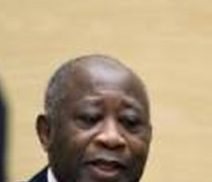
    Since November 2011 Laurent Gbagbo, the former president of Côte d’Ivoire, has been detained at the International Criminal Court in the Hague, accused of being an “indirect co-author” of serious crimes against humanity during the post-election crisis in his country. But many people ask why and doubt the legitimacy of these charges. For many it is his political opponent of the 2010 presidential elections, Alassane Ouattara, that should be in his place detained at the Hague, along with Guillaume Soro, the current President of the National Assembly, who headed the 2002 rebellion that divided the country in two.
  • Ernesto Pagano interviews Jan Keulen, Director of the Doha Centre for Media Freedom 25 January 2013
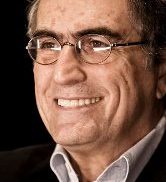
    The Doha Centre for Media Freedom is an organization founded in 2008 with the political and financial support – a 4 million dollar annual budget – of Mozah bint el Misnid, the Emir of Qatar’s powerful wife. Its objective: to assist journalists whose lives are in danger and promote media freedom from the heart of the Persian Gulf. For two years Jan Keulen is at its head. Dutch, class of 1950 and a life spent as a Middle East correspondent for Volkskrant daily newspaper. This is certainly not a simple task because prior to fighting for journalistic and media freedom in the world, Qatar, Al Jazeera’s homeland, finds itself fighting against its own same contradictions: a forty year old press law, a marked attitude of self-censorship by local media and a closure towards freedom of expression by the country’s more conservative fringes. Unsurprisingly, the Doha Centre’s former director, Robert Ménard, founder of Reporters without Borders was accused by the Qatari press of having invited “the Devil in person”, Flemming Rose, director of the Danish newspaper Jyllands-Posten that published the infamous satirical cartoons of Prophet Muhammad in 2005, to Doha. Ménard denied this incident in his book Mirages et Cheikhs en Blanc. According to the French journalist this was just a pretext to be rid of an uncomfortable presence for some elements of the country’s ruling class. In 2009, in fact, little more than a year after the Doha Centre’s inauguration, Ménard handed in his resignations
  • Azzurra Meringolo interviews Stan Collender, Al Jazeera America spokesperson 25 January 2013
    Time Warner Cable pulled the plug on Nobel Prize winner Al Gore’s Current TV just hours after news of the cable channel’s sale to Al-Jazeera became official. After the Arab, English and Balkan channels, Al-Jazeera, which is also preparing to launch a Turkish-language channel, took a major leap into the US cable market on 2 January 2012, acquiring Current TV and announcing plans for a US based news network to be called Al-Jazeera America. Terms were undisclosed, but analysts told the deal could be worth an estimated 500 million dollars. The new channel will be headquartered in New York, but in addition to this existing bureau, others will be opened in Los Angeles, Miami and Chicago.
  • Andrea Dessì 23 January 2013
    On Tuesday 22 January 2013 Israelis have gone to the polls to elect a new parliament (Knesset) and government. No one is expecting big surprises and Benjamin Netanyahu, Israel’s current Prime Minister from the right-wing Likud party, is widely believed to retain his post. He is expected to form a governing coalition with a grouping of nationalist, religious and orthodox parties much in the same fashion as he did following the 2009 vote. The election campaign, inaugurated on the heels of a bloody eight day escalation of violence against Hamas in mid-November 2012, has not been witness to significant excitements, and other than Israel’s continued shift to the right, little new can be extrapolated from the run up to the vote.
  • Father Paolo Dall'Oglio talks to Antonella Vicini 9 January 2013
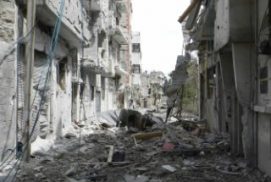
    Father Paolo Dall’Oglio has lived in Syria for over thirty years and is certainly an expert on the Syrian situations with all its lights and shadows. The founder of the Deir Mar Musa monastic community, in the desert north of Damascus, Father Paolo has always been committed to interreligious dialogue with the Muslim world and until last June, when he was sent away by the regime, he personally reported the tragedies he saw every day.  Reset-DoC has interviewed him.
  • Andrea Dessì* 16 November 2012
    A growing chorus of Israeli, Palestinian and international voices are questioning whether a two-state framework for the Israeli-Palestinian conflict is still applicable given the current realities on the ground in the Occupied Palestinian Territories (OPT). Nineteen years since the signing of the Oslo Accords in September 1993 and notwithstanding a massive international effort towards the creation of an independent Palestinian state, a lasting solution to the Israeli-Palestinian conflict is still a distant and by no means guaranteed outcome. The two-state framework, based on a partition of the land and the creation of a yet-to-be defined Palestinian state living side by side with Israel is by far the most accepted outcome for the conflict. It is endorsed by the great majority of domestic and international players and according to opinion polls still enjoys a sizable majority among the respective Israeli and Palestinian communities.
  • Azzura Meringolo, an interview with Nazeeha Saeed 3 May 2012
    While Bahrain’s government concentrated last weekend exclusively on organizing the Formula 1 GP, those who for over a year have been the victims of a repression shrouded in silence, took advantage of this event to attract the world’s attention to their cause. The winds of the Arab Spring had reached Manama on February 4th 2011, when protesters decided to take to the streets demanding political reform and the departure of the Al-Khalifas, the Sunni royal family that rules the country where there is a Shiite majority. The harshest repression began on March 14th when the government allowed troops into the country sent by the Cooperation Council for the Arab States in the Gulf. One thousand soldiers sent by Saudi King Abdallah arrived in Bahrain with a specific mandate; stop the protests and save King Hamad.
  • Giorgio Napolitano 15 March 2012
    The President’s Letter This text, in the form of a letter, was sent to Reset by President Giorgio Napolitano whom we had asked to contribute to a special section marking the fiftieth anniversary of Luigi Einaudi’s death on October 29, 1961. The special section dedicated to this founder of the Republic appeared in Reset no. 127 and included articles by Enzo Di Nuoscio, Paolo Heritier, Paolo Silvestri, Corrado Ocone, Flavio Felice, and excerpts from Einaudi’s correspondence with Luigi Albertini. After I met with Napolitano early last September, the pressure of events forced him to postpone writing until recently. Although much has changed since last October, recalling what Einaudi can teach us remains important above and beyond an anniversary. Einaudi was president of the Bank of Italy from 1945 to 1948 and president of the Republic from 1948 to 1955, but his legacy also includes his writing, his work as economic columnist for Il Corriere della sera until 1925, and his teaching at the Bocconi University where Carlo Rosselli was his assistant.The heart of the matter that we wanted Napolitano to take on is the crisis of Italian politics and the reasons why the values espoused by a father of the Republic as important as Einaudi are no longer evident in the Italian ruling class except in a very few cases. This was also an occasion to reflect on Italian reformism (a tradition that our President represents in all respects) and on lost opportunities across the entire political spectrum.Napolitano’s letter takes full advantage of this occasion and offers many useful suggestions about work—both inquiry and action—that we must continue. We thank him for this.In a letter to the President sent after our conversation last September, I quoted the work of the recently deceased historian Tony Judt. The President refers to this quotation in his text, so I’ll repeat it here: “During the long century of constitutional liberalism…Western democracies were led by a distinctly superior class of statesmen. Whatever their political affinities, Leon Blum and Winston Churchill, Luigi Einaudi and Willy Brandt, David Lloyd George and Franklin Roosevelt represented a political class deeply sensitive to its moral and social responsibilities. It is an open question as to whether it was the circumstances that produced the politicians, or the culture of the age that led men of this caliber to enter politics. Today, neither incentive is at work. Politically speaking, ours is an age of the pygmies” (Ill Fares the Land, Penguin Press, 2010, pp. 164-165). In the same letter, I mentioned that reading the Einaudi-Albertini correspondence (published by the Corriere della Sera Foundation and excerpted in Reset) reveals the magnitude of the work undertaken by earlier statesmen with such great scientific, political, and moral rigor on a daily basis. “This strengthens my conviction,” I wrote, “that the gap Judt speaks about is quite dramatic.” I asked the President to reflect on the issues raised by Tony Judt’s “open question.” Giancarlo Bosetti, Editor of Reset-DoC
Load more