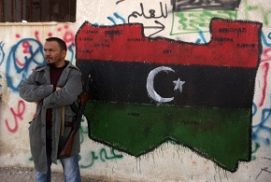

For decades, Latin America’s authoritarian regimes were seen as a right-wing phenomenon, with Cuba as the lone exception — a dictatorship born not from a betrayal of democracy, but of revolution. As Washington’s embargo returns to the headlines, this piece asks what that framing has long obscured: that Cuba has never had just one embargo, but two.
Analyses
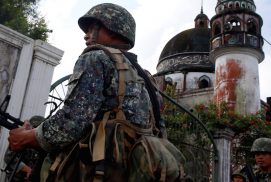
- Paolo Affatato 28 July 2017The liberation of Marawi, the city occupied by militants loyal to Islamic State, will take some time.
- Matteo Tacconi 28 July 2017Protests were organised and attended by large numbers of people in Warsaw and in many Polish cities
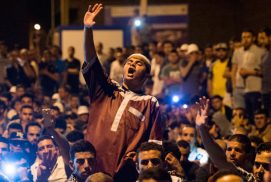
- Sara Borrillo 26 July 2017In recent months the Rif’s ‘people’s movement’ is playing a leading role in Moroccan current events and has been named the Hirāk shaʻabī.
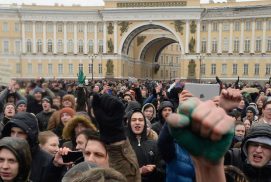
- Giovanna De Maio 21 July 2017Recent nationwide anti-corruption rallies in Russia have increased hope among many observers for a glimmer of political change.
- Matteo Tacconi 19 July 2017In October 2015, the Law and Justice Party (PiS), the reference party for Polish conservativism, returned to power obtaining an absolute majority of seats and putting an end to a series of centrist-liberal governments (PO-Civic Platform).
- 19 July 2017“The monarchy was abolished at the behest of the people. It was because of that same will of the people that the Tunisian Republic was born.” It was with these words that, on July 25th, 1957, the president of the Constituent Assembly, Jellouli Fares, officially announced the beginning of a new era for Tunisia.
- 19 July 2017Tunisia is one of, if not the only success stories linked to that intense period of reform that followed the so-called Arab Springs.
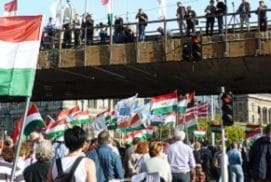
- Francesca Rolandi 12 July 2017Set against the backdrop of sleepy Danubian Europe, Hungary has, in recent months, returned to being at the centre of international attention. What has brought the spotlight back onto Budapest are two laws, passed one soon after the other, which have resulted in conspiracy talk of a deliberate attack on academic freedom and the world of NGOs.
- Massimo Campanini 9 July 2017This short paper is meant to be an introduction intended to wonder whether Libya ever existed or is a modern invention1. Broadly speaking, the answer can be found in the following clear-cut sentence of Jamil Abu’n-Nasr: “The area forming present-day Libya begins to have its own political identity after the Arab conquest only with the establishment of Ottoman rule in it at the middle of the sixteenth century
- Ananya Vajpeyi 6 July 2017All nationalism involves some historical sleight of hand, in choosing what to include and what to exclude while constructing a narrative of the nation’s past, and a shape of its essential identity.