
For decades, Latin America’s authoritarian regimes were seen as a right-wing phenomenon, with Cuba as the lone exception — a dictatorship born not from a betrayal of democracy, but of revolution. As Washington’s embargo returns to the headlines, this piece asks what that framing has long obscured: that Cuba has never had just one embargo, but two.
Analyses
- 5 October 2017Our 9 year long Istanbul Seminars have established themselves as a recognizable cultural fixture for a remarkable community of scholars. It has been able to promote and consolidate a network of cultural, intellectual and academic relationships among senior and junior scholars of the social sciences, political theory, sociology, legal and religious studies. Explore our Istanbul Seminars archive.
- Alessandra Vitullo 5 October 2017On the 27th of September, we lost Alfred Stepan, “one of the greatest scholars of comparative politics”, in the words of Seyla Benhabib; an outstanding political philosopher who has left a strong impression on the comparative studies of religions in democracies.
- Ayse Çaglar 29 September 2017In Turkey, the curtailment of academic freedom and the diminishing autonomy of universities, that assumed unprecedented dimensions after the failed coup attempt, attracted increasingly attention both in the Turkish and international media. Ayse Caglar gives an in deep analysis on the inner workings and the consequences of these assaults on academic institutions, in order to highlight the politics of law in this regime’s authoritarian form of governance.
- Emanuele Giordana 19 September 2017The history of borders – ancient, modern, colonial and so on – along with the tragedies of those straddling them, is nothing new. Every time there is a change of flag, the integration processes are further complicated, often resulting in unresolved identity issues, discontent, legals claims and conflicts.
- Francesca Bellino 18 September 2017An interview with Zeyneb Farhat, cultural entrepreneur and women’s rights activist
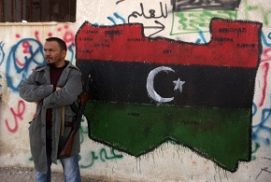
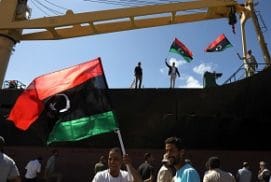
- Moncef Djaziri 9 September 2017This paper addresses the political crisis in Libya and the 2015 Libyan Political Agreement also known as the Skhirat agreement (Morocco). The objective is to show that this crisis is a profound one and caused by circumstances Libya has experienced since the beginning of this transition in 2011.
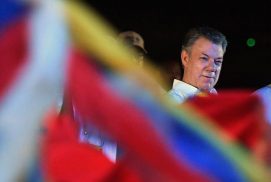
- Riccardo Cristiano 6 September 2017The journey that Jorge Mario Bergoglio is beginning today goes well beyond Colombia’s borders
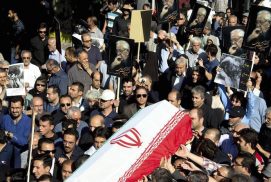
- Marina Forti 4 September 2017The image of Ebrahim Yazdi, who passed away at 86 years of age on the 27th of August
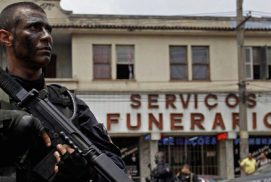
- Luigi Spera 29 August 2017The term used by more than 70 jurists in their denounce manifesto signed in the last days in Rio de Janeiro is “social apartheid”.
- 24 August 2017Tunisian president Beji Caid Essebsi has vowed to increase gender equality in the country