For decades, Latin America’s authoritarian regimes were seen as a right-wing phenomenon, with Cuba as the lone exception — a dictatorship born not from a betrayal of democracy, but of revolution. As Washington’s embargo returns to the headlines, this piece asks what that framing has long obscured: that Cuba has never had just one embargo, but two.
Analyses
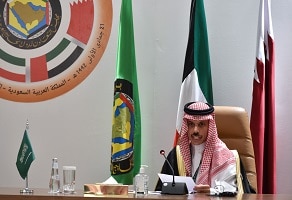
- Hussein Ibish 8 January 2021Almost all sides are winners for now, but a third GCC confrontation remains possible, writes Hussein Ibish
-
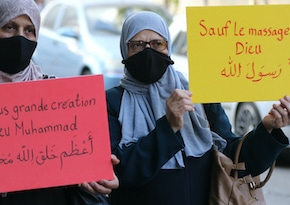
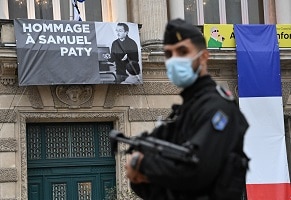
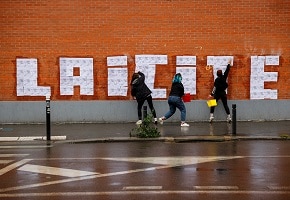
- Nader Hammami 23 December 2020The terrorist murder of French professor Samuel Paty in the Paris suburb in autumn 2020 has re-opened a debate concerning the liberty of teaching, freedom of expression and the role of secularism in a pluralist society. What is the specific nature of French laïcité? To what extent is there a growing confrontation with a part of the Muslim world? Why has this provoked a diplomatic incident between France and Turkey, and more broadly the boycott of French products in many Muslim countries? The on-going ideological debate concerning the role of religion in a secular society, has shown both its local and international implications, where many different actors use it for various strategic purposes. This dossier on the one hand will discuss the boundaries, the origins and the contemporary effects of freedom of expression and laïcité comparing the French, the Western and the Muslim contexts. On the other hand, it will analyse the geopolitical, local and international stakes of this debate.
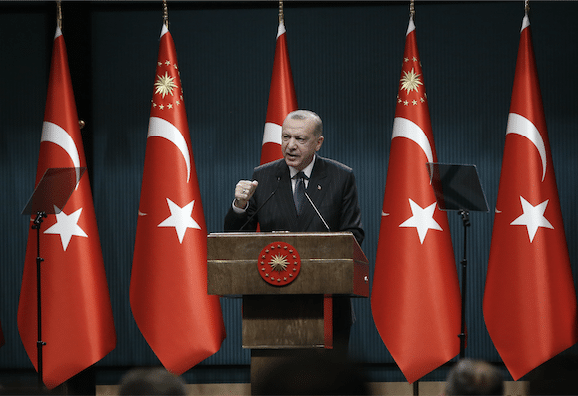
- David Rigoulet-Roze 23 December 2020France, and what it represents, appears in many respects to be a priority target for political Islam in general, and for its extremist avatars in particular. This not a coincidence, since France embodies a singular conception of freedom of expression inherent to laïcité, which it has historically elevated to the rank of a cardinal republican value. “France is an indivisible, laïque, democratic and social Republic. It ensures the equality before the law of all citizens without distinction of origin, race or religion. It respects all beliefs.” It is precisely this respect for all religious beliefs that has been called into question and manipulated for largely political purposes by neo-Ottoman Turkish President Recep Tayyip Erdogan amid the controversy generated by the republication, on September 2, 2020, of the cartoons of the Prophet Mohammed by the Charlie Hebdo weekly newspaper.
- Camilla Pagani 23 December 2020In our fast and consumerist digital way of life, we have forgotten how important it is to disagree. When we look at the world through the lenses of our mobile applications and social media, we only see a fictional image reflecting what we want to hear and to see. Cass Sunstein extensively analyzed this dangerous vicious circle in which people socialize and interact virtually with people that have similar thoughts and tastes, while sharply opposing anyone different. This widely debated and studied phenomenon of polarization is very much related to the contemporary tragic event of the terrorist attack on the French history and geography teacher, Samuel Paty in front of a school in the Parisian suburb of Conflans-Sainte-Honorine.
- Gilles Kepel 22 December 2020
- Philippe Portier 22 December 2020France, just like the rest of Europe, has changed so much since 1905 that socio-political pressures to review the relation between State and religions has become a must. The bill recently put forward by its government aims at a global reform that would, if passed, directly impact freedom of worship, claims Philippe Portier.
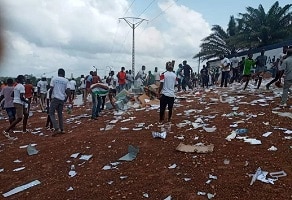
- Nicoletta Fagiolo 21 December 2020Since 78-year-old outgoing President Alassane Ouattara has announced his decision to run again for office, despite the Constitution’s two term limit, nation-wide non-violent demonstrations have erupted across Côte d’Ivoire. The world is paying little if any attention.
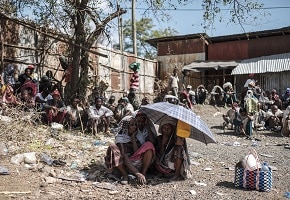
- Uoldelul Chelati Dirar 17 December 2020Last month’s military blitz by the Ethiopian government was the tipping point of a long crisis. Internal and external actors are watching closely for its impact. A long, detailed analysis by prof. Uoldelul Chelati Dirar.
- Claudia De Martino 16 December 2020A long-standing objective of Israel’s foreign policy, the pivot to Asia is a key factor in the current strategy of “normalization” of relations with several Muslim countries. And for a number of different reasons, it is showing increasing sings of success.