
Analyses
For decades, Latin America’s authoritarian regimes were seen as a right-wing phenomenon, with Cuba as the lone exception — a dictatorship born not from a betrayal of democracy, but of revolution. As Washington’s embargo returns to the headlines, this piece asks what that framing has long obscured: that Cuba has never had just one embargo, but two.
  • Matteo Muzio 8 November 2024
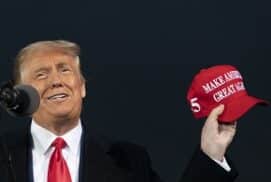
    Donald Trump’s unmitigated triumph in the 2024 presidential election has left American Democrats in a state of profound shock, possibly surpassing their dismay from his earlier 2016 win. Notably, Trump became the first Republican candidate to win even on a purely numerical level, meaning that if Democrats had succeeded in abolishing the Electoral College, he still would have emerged victorious.
  • Claudia De Martino 8 November 2024
    Donald Trump’s clear-cut victory in the US presidential election has shaken the entire world, and has been greeted with sharply contrasting reactions, especially in Middle East. For Palestinians, it felt like the final nail in the coffin. Hopes for American mediation toward a fair resolution of the conflict are virtually non-existent, and Palestinians view the next four years through a lens of mere survival, trying to withstand the blows from Israel’s most right-wing government in history, which will now feel even freer from burdensome external constraints, such as the call to respect international law.
  • Luca Sebastiani 5 November 2024
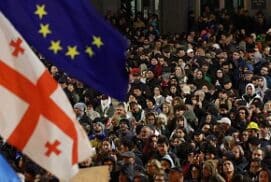
    The October 26 elections and the developments that followed have drawn international attention to Georgia in a way not seen for some time. This interest arose both from the uncertainty surrounding the vote and, especially, from the broader historical and political context: the ongoing war in Ukraine, renewed debates about European Union expansion, and concurrent, hotly contested elections and referendums in Moldova.
  • Giovanni Panzeri 4 November 2024
    In the past decade, China has emerged as a strategic contender to the US-led international system, actively reshaping global economic and geopolitical dynamics. This repositioning has unfolded through China’s proactive involvement in the BRICS+, the launch of the One Belt One Road Initiative (OBOR, or Belt and Road Initiative), and, more recently, through a concerted push to mediate in crises worldwide, capitalizing on both political and economic opportunities. Reset DOC discussed these developments with Claudia Astarita, a professor of Chinese Studies at Science Po University in Paris.
  • Fabio Turco 29 October 2024
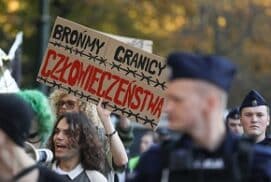
    “Regain control, ensure security.” This is the slogan of a draft law promoted by Polish Prime Minister Donald Tusk and adopted by his government to outline the country’s migration strategy from 2025 to 2030. The proposal has sparked intense debate due to its strict measures, particularly the option to suspend the right to asylum when deemed necessary. Tusk aims to nearly eliminate “illegal” immigration by pursuing a radical approach, enacting measures that conflict with the Geneva Convention, the EU Charter of Fundamental Rights, and even Poland’s own Constitution.
  • Federica Zoja 21 October 2024
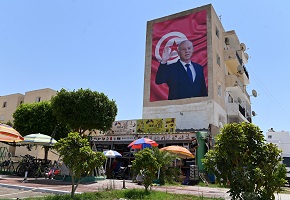
    After surpassing 90 percent approval in the first round of the presidential elections on October 6, incumbent Tunisian leader Kais Saied faces his new term in a political, social, and economic climate vastly different from that of 2019. We discussed this shift with writer and essayist Hatem Nafty, whose latest work, Notre ami Kaïs Saïed. Essai sur la démocrature tunisienne (Our Friend Kais Saied: An Essay on the Tunisian Dictatorship), was presented in late September.
  • Abhijan Choudhury 10 October 2024
    Once a formidable force in Indian politics, the Left has steadily declined over the past 15-20 years. It previously governed the states of West Bengal, Kerala, and Tripura, and maintained a significant presence in the national parliament. Today, it has lost two of those states and become a marginal player. In this year’s national elections, a combination of three Left parties won just eight seats out of 545 in the Lok Sabha, the popular chamber.
  • One year after the Hamas massacre on October 7th, the war has expanded into a regional conflict, involving Lebanon and later Iran. In Gaza, the death toll has reached nearly 42,000. Most of Hamas’ leadership – except for Yahya Sinwar – has been killed, as well as Hasan Nasrallah and much of Hezbollah’s leadership. Meanwhile, 97 Israeli hostages remain in Hamas’ hands, and violence in the West Bank has become increasingly frequent, with many analysts warning of a potential “Gaza-fication” of the area. Reset DOC reached Prof. Olivier Roy, Professor of Political Science at the European University Institute (Florence).
  • Riccardo Cristiano 2 October 2024
    According to the BBC, the missile attack on Hezbollah’s general command bunker is said to have caused 492 casualties, in addition to the wounded. The Israeli army has announced the killing, among others, of Hezbollah’s leader, Hassan Nasrallah, and nearly the entire senior leadership of the party. The number of Lebanese casualties, especially in southern Lebanon and the Shiite neighborhoods of Beirut, remains unknown, as no one can yet account for those trapped beneath the rubble. Israeli forces have gained control of strategic positions near the border, while hand-to-hand combat between Hezbollah militants and Israeli soldiers has already claimed eight Israeli lives. Despite these developments, few believe Hezbollah will disappear
Load more