For decades, Latin America’s authoritarian regimes were seen as a right-wing phenomenon, with Cuba as the lone exception — a dictatorship born not from a betrayal of democracy, but of revolution. As Washington’s embargo returns to the headlines, this piece asks what that framing has long obscured: that Cuba has never had just one embargo, but two.
Analyses
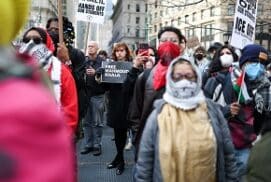
- Hussein Ibish 14 March 2025The administration of US President Donald Trump has left everyone who cares about free speech in the country little choice but to defend and champion Mahmoud Khalil, as he faces the most insidious attack on freedom of conscience in America in at least 60 years.
- Mariano Giustino 12 March 2025The fact that one of the longest conflicts in contemporary history, which has resulted in over 40,000 deaths, could soon come to an end is undoubtedly an event worth celebrating. Kurdistan Workers’ Party (PKK) leader Abdullah Ocalan has ordered the armed wing of the party he founded in 1978 to end the armed struggle and dissolve the organization. Is this the end of an era? It’s still too early to say.
- Gaetano Pentassuglia 6 March 2025However exceptionally dramatic and complex current (new and old) conflicts like Ukraine and Palestine are, it is hard to believe that the vast and long-established network of legal relationships between states, and between the latter and non-state actors alike—the almost unlimited number of areas governed by over 250,000 international treaties, customary rules, and over 2,000 sectoral global regimes—will fall to pieces as a result of contingent geopolitical considerations (even though, admittedly, the new geopolitical context may stay with us for some time to come).
- Seán Golden 3 March 2025It is extremely difficult to accurately predict what will unfold in Trump’s relations with China or their effects on the rest of the world, but it may be possible to identify and analyze some of the major scenarios in which they will unfold, including the emerging post-Bretton Woods world order, world trade, the role of science, technology, engineering, and mathematics (STEM) in a global setting, and security issues.
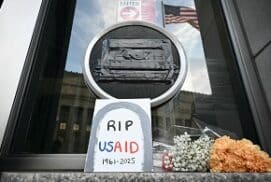
- Matias Xerxes Gonzalez Field 3 March 2025USAID has provided resources to over 130 nations, accounting for 42 percent of the humanitarian aid tracked by the United Nations. Until 2023, its funding averaged around 40 billion dollars per year. After cuts to positions and resources, the agency’s budget has now been reduced to approximately 100 million dollars. The freezing and blocking of USAID’s domestic workforce have had the most evident and severe consequences abroad. While the number of workers fired in the US amounts to just over 1,500 employees, the agency employs over 10,000 people around the globe.
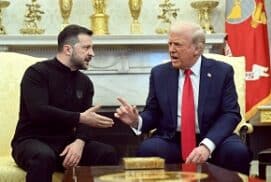
- Hussein Ibish 24 February 2025Saudi Arabia hosted a meeting on February 21 with all six Gulf Cooperation Council countries plus the crucial additions of Egypt and Jordan to begin crafting a formal Arab response to President Donald J. Trump’s fantastical scheme to redevelop Gaza after removing its 2.2 million Palestinian residents. Trump’s supporters and officials claim that this sudden Arab urgency to respond with an alternative to his Gaza plan is a diplomatic achievement and the real purpose of his radical proposal. Yet whatever the Arab countries come up with at this GCC +2 meeting, or at the March 4 full convening of the Arab League, will not be practicable given Israel’s policies.
-
- Fulvia Giachetti 19 February 2025Like any “ism,” liberalism is many things, but its diverse conceptual and political values are undeniably in crisis. From Viktor Orbán’s embrace of “illiberal democracy” and Donald Trump’s incendiary rhetoric to the British Blue Labour’s pro-worker yet anti-woke stance, reactions to liberalism’s decline vary widely. Yet, they share a common thread: postliberalism. Postliberalism itself is complex. To unpack its nuances, Reset DOC spoke with Chris Wright, history professor at the City University of New York and author of Popular Radicalism and the Unemployed in Chicago during the Great Depression.
- Federica Zoja 15 February 2025“Every day there’s something new. Donald Trump’s political agenda is totally unpredictable: today it’s the Gaza Strip, tomorrow it will be Ukraine!” Sebastien Boussois, an analyst and researcher at the Université Libre de Bruxelles and at Uqam in Montreal, is one of the most authoritative voices in the French-speaking world on the subject of relations between the West and the Gulf States. In the aftermath of Riyadh’s vehement opposition to the American proposal to empty Gaza and rebuild it, his first comment is unequivocal: “It’s all a show, a complete charade! I think that Saudi Arabia, through the voice of its Foreign Minister, is obliged to reject Trump’s proposal for annexation. But also that there is no lasting or solid agreement in the region as strong as the one between the United States and Saudi Arabia: let us remember, it dates back to 1945, after the end of the Second World War.”
- Chandra Mallampalli 12 February 2025At the confirmation hearing of Kash Patel for the position of FBI Director, Senator Thom Tillis introduced him as the son of Indian immigrants from their home state of Gujarat, which he described as a “melting pot” of religions. Patel’s father had fled Uganda during Idi Amin’s expulsion of Indians before ultimately settling the family in New York. Patel displayed his religion and ethnicity alongside his belief in the U.S. Constitution. He saluted his parents by declaring “Jai Sri Krishna,” a greeting that literally means glory or victory to Lord Krishna. If we set aside the grave concerns Democrats raised about Patel’s conspiracy mongering and his ambitions to dismantle the “deep state” by exacting revenge on Trump’s enemies, Patel’s nomination appears to reflect values Democrats would embrace: a commitment to pluralistic democracy, an embrace of racial and cultural differences, and an affirmation of America as a haven for immigrants. But are these the values that drew him to the Trump administration?