For decades, Latin America’s authoritarian regimes were seen as a right-wing phenomenon, with Cuba as the lone exception — a dictatorship born not from a betrayal of democracy, but of revolution. As Washington’s embargo returns to the headlines, this piece asks what that framing has long obscured: that Cuba has never had just one embargo, but two.
Roberta Sala, University of Milan San Raffaele26 June 2014
In her paper entitled The changing face of toleration Susan Mendus critiques the idea of toleration as acknowledgement, which she calls “new toleration”, in opposition to the more classical notion of toleration as not interfering in what we consider an object of disapproval (be these decisions, actions or forms of behaviour). In particular “new toleration” is not, in her opinion, able to answer new questions posed by religious toleration. These are in truth ‘surprisingly’ new issues, when considering that until a decade ago they seemed definitively resolved
The topic of toleration has interested, indeed fascinated, me for nearly 30 years. Twenty-eight years ago, in 1985, I was appointed Morrell Fellow in Toleration at the University of York, and I have continued to work within the Morrell Centre ever since – first as a Research Fellow, then as Director of the Programme, and now as Morrell Professor Emerita. In short, the problem of toleration has occupied much of my working life. However, looking back on the past 30 years, it is interesting to note that the problem of toleration is not at all the same now as it was when I began studying it all those years ago, and my main focus this evening will be on ways in which the problem of toleration has changed and with the new challenges which toleration faces in the modern world. Let me begin, though, by saying something about the way in which the problem of toleration was understood when I first began studying it all those years ago.
Towards to end of his life, Bernard Williams was eager to urge upon his readers the relevance of the historical dimension of philosophical understanding. In particular, if what is at stake is the clarification of a moral or a political concept, he claimed that philosophers need “what is unequivocally some kind of history”. Conceptual analysis on its own is insufficient because “the so called essence of a certain value (…) may be so schematic or indeterminate that it can be understood only by reference to particular historical formations. Nothing that has a history can be defined, as Nietzsche rightly said, and our virtues and our values certainly have a history”. It is difficult to think of a better example than toleration to vindicate Williams’s claim.
Constant attention to the world of women, to Indian social situations and policies that are only now slowly changing; violence, rape, or threats made against women, only nowadays at times reported with all the risks and dangers this involves, are words the Bengali director Aparna Sen, born in 1945, has always used with the special attention she has always paid to social issues and especially the feminine universe.
Elliot Rodger murdered six students at my university, UC Santa Barbara. Horror sometimes offers us a mirror. Looking at the pathological forces us to examine the normal. In our country, the normal means men’s guns and women’s bodies. The event again reminds us that the United States is great at mass murder, that we live in a freakish land where carrying semi-automatic weapons is a citizen’s right. At the memorial service, Richard Martinez, a victim’s father, asked us to rise and repeatedly shout out: “Not one more!!” The very day of the memorial a 21 year-old UCSB student was arrested for accidentally shooting his 9 mm. Glock pistol through the wall into the adjoining Isla Vista apartment. Police found seven firearms and a thousand rounds of ammunition.
Original article published on CNN
When religion is used, or misused, as a violent tool against the innocent, then it is the user not the tool that is the source of violence. The mere idea of traumatizing a human soul violates all values on Earth. Whether based on religious texts or human interpretations, no value in the history of mankind justifies any brutal act against any of God’s creation.
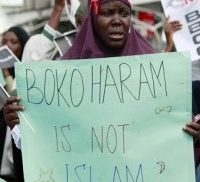
While the world media has been closely following the fate of the Nigerian schoolgirls kidnapped by Boko Haram, the main [Arab] TV outlets have only been giving it superficial coverage. In doing so, they have been condemned by various official Islamic bodies.
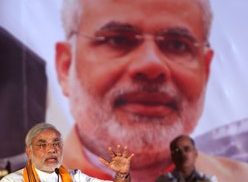
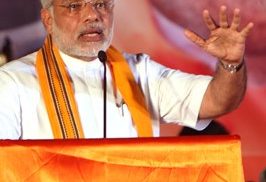
Ever since Partition and Independence, Indian political life has privileged the concepts of diversity, pluralism, tolerance and inter-religious harmony. The way to realise these values, according to the ideology dominant thus far, was to have a state that expressed equal ‘love’ for all communities, that is, a state taking it upon itself to safeguard the peculiarities, rights and interests of groups defined along the axes of religion or caste, or as a majority and multiple minorities. As Pratap Bhanu Mehta has explained recently, in the vision of its founders and the architecture of the Constitution, India was conceived of as a ‘federation of communities’ with a paternalistic, secular state presiding over and managing a mosaic of identities. But, the outcome of India’s 2014 general elections, which puts the Hindu nationalist Bharatiya Janata Party (BJP) in power under the leadership of Narendra Modi – sworn in as the new prime minister on Monday 26 May – calls for a widespread debate on the meaning, purpose and definition of secularism in this country.
The question “can European Islam be inspiring to the Arab world?” may smell of pejorative Orientalism: Europe thinks for the Arab world even when it comes to religion! Yet, the intent (anniya in Arabic) is not that. The question aims at questioning the established dichotomy of “Islam vs. the West.” Comparing two geographies or two versions of religion in two different political entities is the aim here, though the title seems to compare a religious interpretation in a political geography “European Islam” with a another political geography “the Arab world.” By the Arab world here is meant “Arab Islam” – to avoid repeating “Islam” twice. Both Western Europe and the Arab world are heterogeneous and have different histories with religion and politics, and it is not acceptable to put them all in one basket through entities as the title above suggests. However, it is the links between these two geographies, polities, and histories that have encouraged posing the question for further reflections.
As India enters its 2014 general election to constitute the 16th Lok Sabha, the spectacle of prominent commentators adjusting their views towards the Bharatiya Janata Party (BJP) and its prime ministerial candidate, Narendra Modi unfolds before our eyes with escalating frequency and vivid clarity. These adjustments — to use a term that is more descriptive than judgmental, at least for starters — take a variety of forms, and come from a range of observers, analysts and experts.
We use cookies to ensure that we give you the best experience on our website. If you continue to use this site we will assume that you are happy with it.Ok