For decades, Latin America’s authoritarian regimes were seen as a right-wing phenomenon, with Cuba as the lone exception — a dictatorship born not from a betrayal of democracy, but of revolution. As Washington’s embargo returns to the headlines, this piece asks what that framing has long obscured: that Cuba has never had just one embargo, but two.
The late Egyptian theologian Nasr Hamid Abu Zayd (10 July 1943 – 5 July 2010) was destined to be an Azharite sheikh, but the death of his father when he was fourteen, and the obligations of life led him to contribute to family household from an early age. However, he did not leave his scholarly thirst; he got his PhD in 1981 with a thesis on “The Philosophy of Interpretation: Mohi Eddin Ibn Arabi’s Method of Interpreting the Quran.” He belonged to the Muslim Brotherhood in Tanta in 1954, worked in Radio, and held lectureships and fellowships in Sudan, the USA, Japan, and the Netherlands; he received scholarly rewards for his works from Tunisia, Jordan and other international institutions. He was the student and colleague of the living famous philosopher Hassan Hanafi (b. 1935), whose project of the Islamic Left he (Abu Zayd) critiques especially in Critique of Religious Discourse (1990). He also met in scholarly discussions with contemporary philosophers-theologians like Sadeq al-Azmeh, Mohammed Arkoun, Abdolkarim Soroush, and Mohammad Amareh. Nasr Hamid Abu Zayd will be remembered as a staunch rationalist and liberal theologian that defends three major values from within his own Islamic faith – reason, liberty, and justice. In his own words, “Islam truly liberated man”; to recover that achievement, re-interpreting the Sacred Text is a must for renewed liberation, based on considering “this-world” the essence of existence. This is an homage to his great contributions at the age of Arab-Islamic intellectual predicament, and political turmoil led by bloody hijackers of the Quran.
From 2004 onwards, with the EU moving eastward, anti-foreigner attitudes reappeared. The beliefs in Polish plumbers invading western regions, Bulgarian workers “stealing” jobs, and Rumanians (allegedly) promoting illegal activities became widespread in some European societies. This mirrors what happened in the past century, including in 1903 when a royal commission report on the so-called “alien immigration” to the UK discussed Central and Eastern European immigration (at the time mostly of Jews), and, to try to ban it, used words which sound very familiar to us: overcrowding, lack of jobs, and shortage of housing. These nationalist anti-immigrant tendencies resurface quite frequently in European history. The difference is how we approach them and how one frames public debates.
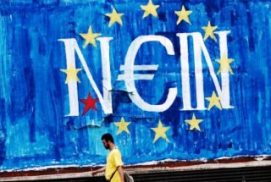
What remains of the sovereignty of the people in next Sunday’s referendum in Greece? Something of course remains, something important. We are, however, far from what those words meant when nation-states defined with certainty the future of their political, economic, military and legal order. The Greeks will announce an apparently clear nai or oxi, a “yes” or a un “no”, addressed, however, at very different national, European and international orders of “sovereignty.”
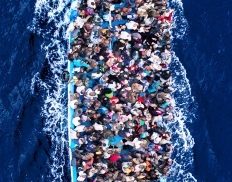
On June 17th the Hungarian government decided to close its border with Serbia, securing it with metal fencing all along its 175 kilometres. Controversy is rampant. The Serbian government is outraged, with the press reporting on yet another wall in the European fortress. Associations active in the field of migrants’ human rights have, euphemistically speaking, expressed perplexity. According to the Hungarian government, closing the border will stop the flow of migrants that has affected the country in recent months. They almost all transit through Serbia, a fundamental part of the “Balkan route.” Migrants also travel to Europe by land. Frontex, the European agency responsible for monitoring and controlling borders, has reported that, in the first six months of 2015, the same number of people have arrived in Europe from the two Mediterranean routes (one leading to Sicily and the other to Greece) and from the Balkans, amounting to 50,000 migrants.
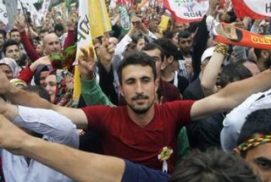
The result of the elections in Turkey was surprising for two main reasons, the downturn experienced by the governing Justice and Development Party – Erdoğan’s AKP – and the pro-Kurdish HDP’s arrival in parliament, also representing in a broader manner the Turkish democratic and pluralist left. The challenge was not an easy one due to the enormous disproportion of resources and the very loud and violent tone of the electoral campaign. Furthermore, there was the 10% threshold established following the 1980 coup d’état, which for decades altered real representation in parliament.
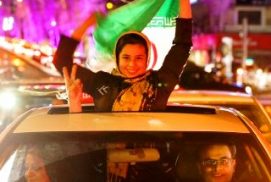
Tehran – One front page headline reads “Delegation of U.S. oil companies to visit Tehran.” Others instead announced that “Trade delegations follow one another.” There have even been headlines stating “Crowds of foreign investors prepare to invade Iran,” with English-language Iranian newspapers not holding back in their use of superlatives and one column saying that Iran is the “last frontier” for international investors. Expectations are high, extremely high.
When reading the Russian press one can deduct that patriotism has become a fundamental key for understanding the Russian Federation’s foreign policy. It is interesting to study the different analyses of this phenomenon, from the most conservative to those most critical of the regime. What does Russian patriotism consist of? According to Andrej Il’nitskij – a political analyst and a member of Putin’s “United Russia” party – there is now a “democratic patriotism” in Russia. It is a peculiar ideology that starts with a negation of what the country is not – neither a fascist government like Kiev’s nor plutocratic liberalism following the Western model – and protects the state’s traditional values. Russian patriotism is “democratic” – since it is supported by the majority of the country, but also “creative” because it is free from the impediments typical of the liberal ideology. Its pillars are the educational system, the army, the media and the Russian intelligentsia.
This essay was published by our Italian magazine Reset n.97, Sept.-Oct. 2006
The historical events that marked the years 1989-1990, the fall of the Berlin Wall and with it the Communist bloc, paved the way for radically new perspectives in schools of thought and the collective imagination. The famous statement made by former American President George Bush Sr. announcing the “end of the Cold War” and the birth of a “new world order” provided this perspective with an official seal of approval. The entire world expected a radical change in international relations. Hopes were expressed, optimistic forecasts were made; the “end of history” was even announced with the definitive triumph of liberalism and democracy. In Third World countries there was hope that the West would renounce the “logic of war” that had characterised its relations with the rest of the world, applying more inspired policies now motivated by the values of Enlightenment, those of “liberty, equality and fraternity.” Many members of the modern elites of these countries believed that the West, having won the Cold War, would encourage democratic change in the Third World. Some even stated that the West would certainly demand, as a starting point for all forms of cooperation with Third World governments, a real democratisation of political and social life as well as honest and real respect for human rights etc. Therefore, as far as people in the Third World were concerned, the West’s future relations with their countries would essentially have depended on making “new foreign policy” choices, continuing to manoeuvre within the framework of the same logic of war, or proceeding instead towards a real “reconstruction” of their own policies and strategies in order to allow relations with the South to be set within what was called the “post-Cold War” period.What has happened to those aspirations? In what way did the West perceive its future relations with the Third World in general and the Arab-Islamic world in particular? As far as politics are concerned, one must add that in the West, aspirations have now been replaced by scenarios created by professors of “strategic studies.” The observer preferring not to fall prey to the uncontrolled prejudices and reactions of fanatic and xenophobic right-wing environments, European and American, can satisfy all his curiosities by drawing on the self-proclaimed authoritative ideas of these professors.
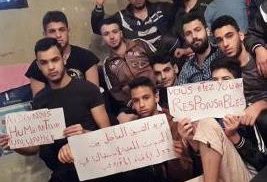
After a hundred individuals were kept in arbitrary detention at the Karmooz Police station in Alexandria, Egypt, they began a hunger strike to bring international attention to their plight. But their last battle started in October 2014. The majority of the 74 refugees-detainees in Karmooz police station are part of a group of Syrian and Palestinian-Syrians that left from Turkey by boat on 23 October last year. They wanted to reach their family members in Europe, but they were arrested in early November 2014 by Egyptian coast guards, after becoming victims of the smuggler mafia.
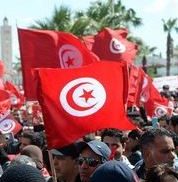
Tunisia is known as the birthplace of the so-called Arab Spring. It was the country that witnessed the first popular uprising leading to the overthrow of an established government in the Middle East and North Africa in the 21st century. The Tunisian revolution was the spark that ignited and inspired other revolutions in the region. But Tunisia is also the country that has more or less succeeded in insuring a peaceful political transition.
We use cookies to ensure that we give you the best experience on our website. If you continue to use this site we will assume that you are happy with it.Ok