
Analyses
The history of the Islamic Republic of Iran—established in 1979 following the revolution that overthrew Shah Mohammad Reza Pahlavi—is marked by a dense sequence of developments that have progressively altered its political and institutional configuration. These changes, however, have only sporadically been recognized by Western analyses, which have instead tended to perpetuate a more functional and instrumental stereotype based on the image of a monolithic, highly verticalized religious autocracy. While such a characterization was broadly accurate during the first decade of the Islamic Republic, it has undergone a profound transformation since 1989.
  • Ramin Jahanbegloo 9 January 2015
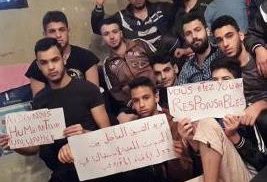
    The barbarian and inhumane attack on innocent French journalists and cartoonists of Charlie Hebdo — following incidents like the massacre in Peshawar, the killings of the innocent Yazidis by the Islamic State and the kidnapping of 172 women by Boko Haram in Nigeria — have created a sense of alarm and fear of religious fanaticism. Fear of religious fanaticism is nothing new in our world. What is new about all these attacks is that they have all taken the form of a new barbarism.
  • Emma Bonino interviewed by Antonella Rampino 5 November 2014
    Emma Bonino, Italy’s former minister of foreign affairs, has returned from Iran, where, with a group of European and Arab experts on Middle Eastern affairs organised by the European Council on Foreign Relations, she attended a two and a half hour long briefing with Foreign Minister Zarif. However, returning from the country from which, as Italy’s Foreign Minister, she was the first to sense a strong signal of political change when the reformists won, Emma Bonino has brought a warning: “Should negotiations on nuclear issues fail, the only real chance of beginning a stabilisation process for the entire region would be lost.”
  • Italian MP Khalid Chaouki interviewed by Elisa Gianni 27 October 2014
    “The first to pay with their lives are those who profess this religion in a peaceful, calm and respectful manner.” With those words the Italian Speaker of the House Laura Boldrini commented on her meeting with the secretary of Italy’s Islamic Cultural Centre, Abdellah Redouane, and the faithful who were meeting for Friday prayers at Rome’s Great Mosque. This was an encounter that the Islamic community had wanted and requested and addressed at Italians and Muslims in order to say “no to terrorism” and reiterate that “Islam is a religion of peace.” Those words were part of the clear and explicit appeal read at a table at which the Italian state’s third highest ranking official sat next to authorities of the largest mosque in Europe.
  • Giuliano Battiston 29 September 2014
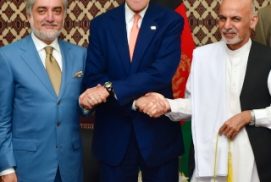
    On Monday, September 29th, the curtain will drop on the lengthy rule of Hamid Karzai, in power since 2001. He will be replaced in Kabul’s large Arg presidential palace by Ashraf Ghani, whose appointment will be sealed at a solemn ceremony, albeit one less festive than expected. The Afghans and the international community would have liked to celebrate the central Asian country’s “first peaceful and democratic transfer of power in recent history”, but things did not turn out as expected.
  • Conference 4 September 2014
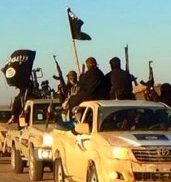
    Reset-Dialogues is pleased to republish the summaries and video of a panel discussion organized at the National Press Club in Washington by the Center for the Study of Islam and Democracy. Islam and foreign policy experts – among whom John Esposito, Shadi Hamid, Michele Dunne, and Michael O’Hanlon – talked about the causes for the rise of radicalism in Iraq and Syria and the creation of militant groups such as ISIS. They discussed the intentions of ISIS and the threat posed to the Middle East and the rest of the world. The panelists provide criticism of the Obama administration’s response to ISIS and offered recommendations for moving forward.
  • Press release 27 August 2014
    Reset-Dialogues is pleased to republish and subscribe to the following press release in which the Center for the Study for the Studi of Islam and Democracy (CSID), based in Washington DC “condemns in the strongest possible terms the gruesome and barbaric killing of journalist James Foley by the so-called Islamic State (formerly known as the Islamic State of Iraq and the Levant (ISIL) or of Iraq and Shem (ISIS)).”
  • Lapo Pistelli interviewed by Francesco Bravi 22 August 2014
    Deputy Foreign Minister Lapo Pistelli is the Italian government’s delegate for the Middle East and in the past was a professor and OSCE representative as well as being a former member of the Italian and European parliaments’ Foreign Affairs Committees. Pistelli’s long summer started when he returned to Italy with the last flight out of Erbil before U.S. air strikes on ISIS jihadists began. There he saw first-hand Iraq’s wounded image in refugee camps, filled with those who had already abandoned everything to flee the men led by “Caliph” al-Baghdadi, and were now preparing to flee once again. Today, he believes, such an international crisis or the decision-making system in place called upon to remedy matters, are no longer issues to be addressed by desk-strategists, because when events are this harsh, a backlash can only be prevented by the United Nations’ centrality and the flexible of politics and diplomacy.
  • Roberta Sala, University of Milan San Raffaele 26 June 2014
    In her paper entitled The changing face of toleration Susan Mendus critiques the idea of toleration as acknowledgement, which she calls “new toleration”, in opposition to the more classical notion of toleration as not interfering in what we consider an object of disapproval (be these decisions, actions or forms of behaviour). In particular “new toleration” is not, in her opinion, able to answer new questions posed by religious toleration. These are in truth ‘surprisingly’ new issues, when considering that until a decade ago they seemed definitively resolved
  • Susan Mendus, University of York 26 June 2014
    The topic of toleration has interested, indeed fascinated, me for nearly 30 years. Twenty-eight years ago, in 1985, I was appointed Morrell Fellow in Toleration at the University of York, and I have continued to work within the Morrell Centre ever since – first as a Research Fellow, then as Director of the Programme, and now as Morrell Professor Emerita. In short, the problem of toleration has occupied much of my working life. However, looking back on the past 30 years, it is interesting to note that the problem of toleration is not at all the same now as it was when I began studying it all those years ago, and my main focus this evening will be on ways in which the problem of toleration has changed and with the new challenges which toleration faces in the modern world. Let me begin, though, by saying something about the way in which the problem of toleration was understood when I first began studying it all those years ago.
  • Mario Ricciardi, University of Milan 26 June 2014
    Towards to end of his life, Bernard Williams was eager to urge upon his readers the relevance of the historical dimension of philosophical understanding. In particular, if what is at stake is the clarification of a moral or a political concept, he claimed that philosophers need “what is unequivocally some kind of history”. Conceptual analysis on its own is insufficient because “the so called essence of a certain value (…) may be so schematic or indeterminate that it can be understood only by reference to particular historical formations. Nothing that has a history can be defined, as Nietzsche rightly said, and our virtues and our values certainly have a history”. It is difficult to think of a better example than toleration to vindicate Williams’s claim.
Load more
SUPPORT OUR WORK


Please consider giving a tax-free donation to Reset this year

Any amount will help show your support for our activities

In Europe and elsewhere
(Reset DOC)


In the US
(Reset Dialogues)


x