For decades, Latin America’s authoritarian regimes were seen as a right-wing phenomenon, with Cuba as the lone exception — a dictatorship born not from a betrayal of democracy, but of revolution. As Washington’s embargo returns to the headlines, this piece asks what that framing has long obscured: that Cuba has never had just one embargo, but two.
Analyses
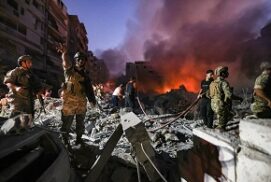
- Riccardo Cristiano 2 October 2024According to the BBC, the missile attack on Hezbollah’s general command bunker is said to have caused 492 casualties, in addition to the wounded. The Israeli army has announced the killing, among others, of Hezbollah’s leader, Hassan Nasrallah, and nearly the entire senior leadership of the party. The number of Lebanese casualties, especially in southern Lebanon and the Shiite neighborhoods of Beirut, remains unknown, as no one can yet account for those trapped beneath the rubble. Israeli forces have gained control of strategic positions near the border, while hand-to-hand combat between Hezbollah militants and Israeli soldiers has already claimed eight Israeli lives. Despite these developments, few believe Hezbollah will disappear
- Ilaria Romano 1 October 2024Elections have been postponed indefinitely in autonomous Northeastern Syria, also known as Rojava. Initially scheduled for May 30th, they were first delayed to June 11th and then to August 8th, but the timetable was never confirmed. Officially, this was attributed to insufficient time for electoral campaigning, but more realistically, it was due to genuine concerns over a potential new Turkish escalation in the area.
- Ruth Hanau Santini 30 September 2024Since July 25, 2021, Tunisia has been in a state of self-coup. President Kais Saied, elected two years earlier, suspended parliament that summer, had the prime minister resign, and issued two presidential decrees that consolidated all executive powers in his hands – rather than sharing them with the prime minister, as outlined in the 2014 Constitution.
- Vanessa Breidy 28 September 2024Until September 17, the situation was still under control in Lebanon. That changed when around 3,000 Hezbollah-linked pagers exploded simultaneously around 3:30 PM. Twenty-four hours later, another round of explosions hit hundreds of walkie-talkies used by Hezbollah members. On September 20, commanders from Hezbollah’s Radwan force, a special operations unit, were assassinated in the suburbs of Beirut. By September 23, the conflict had peaked with heavy bombardment in southern Lebanon and the Beqaa Valley, killing over 500 people, many of whom were civilians, women, and children. Attacks on Hezbollah leaders have continued daily, and bombings have reached Byblos and Keserwan. In response, Hezbollah has launched rockets at Haifa and targeted Tel Aviv, a first since the war began.

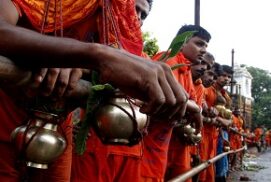
- Abhijan Choudhury 27 September 2024India’s ruling Bhartiya Janata Party (BJP) has repeatedly been accused by the opposition and civil society of pursuing divisive politics and promoting a sectarian agenda aimed at dismantling the country’s secular foundations to establish a majoritarian state. The recent incident involving the Kanwarias, pilgrims devoted to Lord Shiva, should be viewed in this context, rather than dismissed as trivial, as has been done with similar cases in the past. It once again highlights that the party and its leadership are focused on securing power by appealing to the majority community while sidelining minorities.
- Lorenzo Monfregola 24 September 2024In Germany, September dealt a harsh blow to Olaf Scholz’s Ampel, the “Traffic light” coalition of Social Democrats, Greens, and Liberals. Elections on September 1 in the eastern states of Thuringia and Saxony underscored the government’s deepening crisis. While the September 22 vote in Brandenburg brought a faint glimmer of hope, particularly for the SPD, it was far from a solid win for the Ampel. Nationwide polls continue to show strikingly low support for Scholz’s cabinet, raising doubts about its ability to hold together until the next national election, set for September 2025.
- Claudia De Martino 6 September 2024The Israeli Defence Forces (IDF) claim to have eliminated 17,000 of the original 27,000 Hamas militants, including three of the group’s top four commanders – Ismail Haniyeh, Mohammed Deif, Salal al-Aruri – leaving only Yahya Sinwar, for the current leader, still at large. However, the Israeli government’s ultimate objectives remain unclear.
- Ilaria Romano 2 September 2024Brother Wissam drives his pickup truck to the convent where he lives alongside other Franciscan friars. He’s on his way back from Erbil, the capital of Iraqi Kurdistan, where he picked up his nephew Francius, 19, on vacation in Iraq on his own for the first time. Like many Christian Iraqis, especially ordained ones, Wissam studied abroad for a few years, but never considered leaving his country permanently. The city he calls home is Qaraqosh (in Syriac) or Bakhdida (in Arabic), thirty kilometers from Mosul, the symbol, since 2014, of the Islamic State’s fury against Christians.
- Renzo Guolo 29 August 2024One piece is still missing in the tragic Middle East conflict. After the August 25 clash between Israel and Hezbollah – of which both sides have only provided partial accounts tailored to their internal and external propaganda – an anticipated Iranian retaliation remains pending, announced but postponed to a “timely moment.”
-