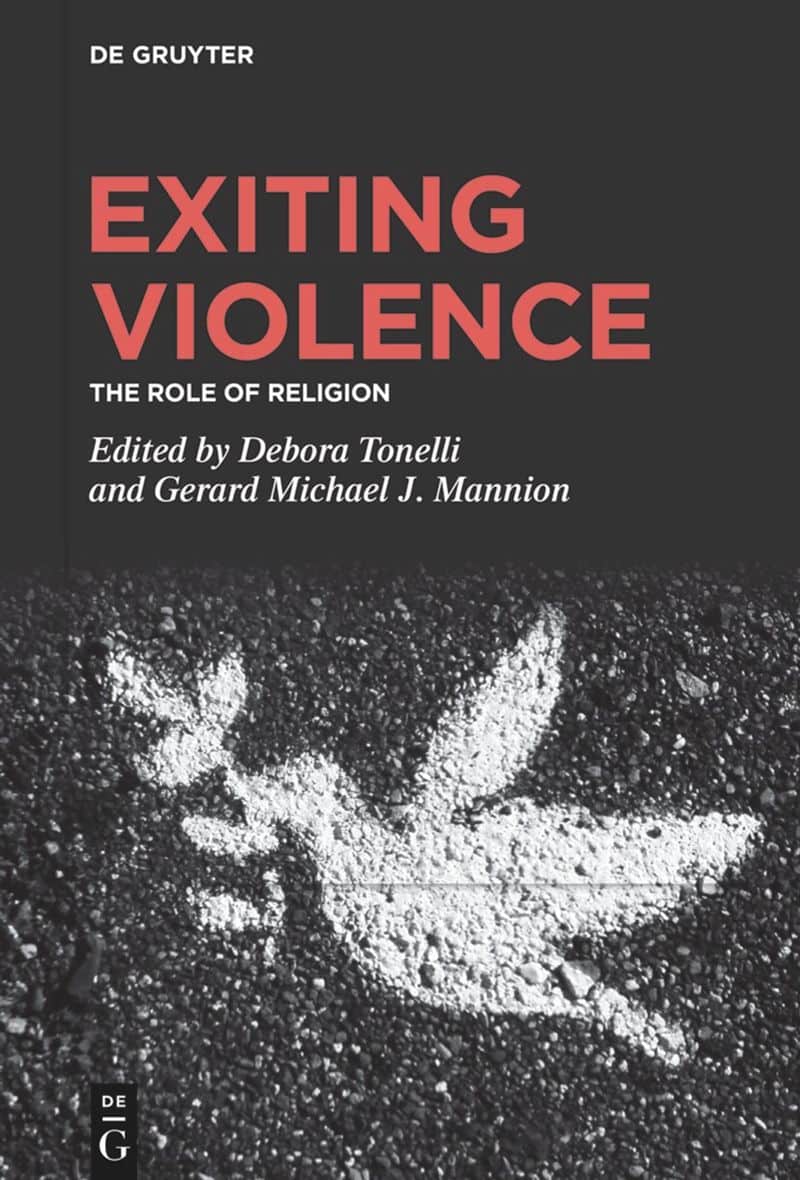
In the 20th and 21st centuries, where violence has scarred countless lives, the interplay between religion, politics, and conflict remains a complex web. Exiting Violence looks to untangle some of these knots, showing not only how faith can ignite bloodshed, but also how it can inspire peace and build bridges. From Biblical hermeneutics to Buddhism, from secularism to legal systems, Exiting Violence offers a nuanced and thought-provoking exploration of the multifaceted role religion plays in the human struggle for peace and justice.
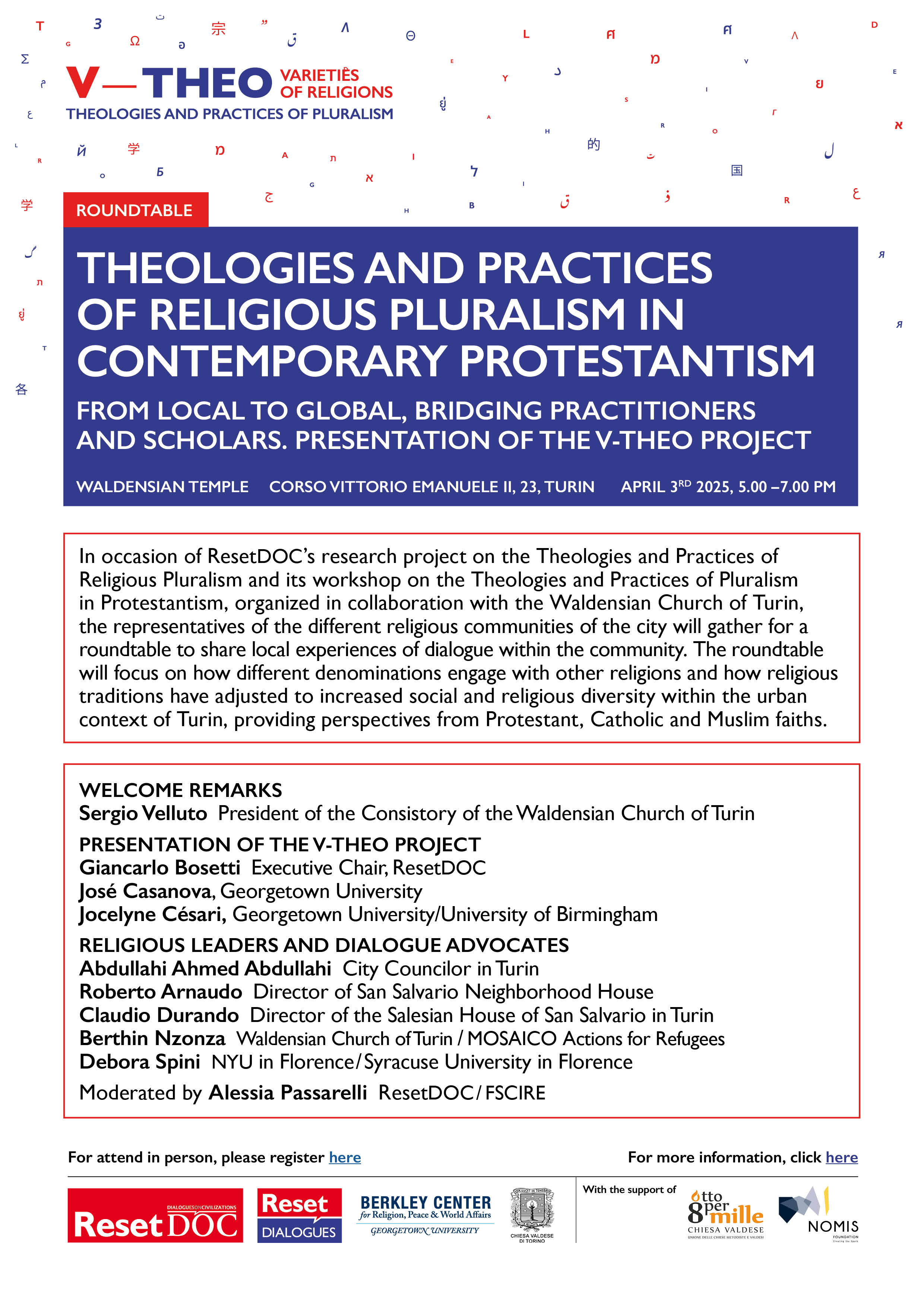
The project “Theologies and practices of religious pluralism” investigates current debates and issues on pluralism within and across religious traditions and how some of these debates are reshaping the status of religion in different public spaces. These adaptations have a profound impact on international relations and daily life in every society, across cultural, ethnic, racial divides.
This project is jointly promoted by Reset DOC (Italy), Reset Dialogues (US) the University of Birmingham (UK), the Berkeley Center at Georgetown University (US), the Foundation for Religious Sciences in Bologna and Palermo (Italy) and the Haifa Laboratory for Religious Studies (Israel).
The international association Reset Dialogues on Civilizations has launched the Reset Seminars of Pluralism in the Middle East and North Africa, a yearly international program on cultural and religious pluralism and political liberties. The purpose is to promote a local intellectual response to the rise of rigorist strands of Islamic thought by training 40 emerging opinion-leaders on the relationship between religion, history and power and to contribute to the reawakening of pluralistic traditions in Muslim contexts.
It is impossible to understand the Russia–Ukraine conflict—or to envision a path to peace—without examining the ecclesiological dimension of relations between Moscow and Kyiv. Kyiv has been regarded as the cradle of Russian Orthodoxy since the tenth century, making religious authority and identity deeply intertwined with political power in the region. In Ukraine today, over 72 percent of the population identifies as Eastern Orthodox. For decades, Ukrainian Orthodoxy was largely structured around churches linked to the Moscow Patriarchate, which rejected any ecclesiastical separation from Kyiv. This arrangement was dramatically challenged in 2018, when Patriarch Bartholomew I established the autocephalous Orthodox Church of Ukraine. Although this church now claims the allegiance of more than half of Ukraine’s Orthodox believers, it has never been recognized by Moscow.Reset DOC’s new documentary by Filippo Macelloni, “The Russia–Ukraine Conflict and the Role of the Orthodox Church”, examines how religion, identity, and geopolitics intersect at the heart of Europe’s most devastating war.
The Seminars will explore the relationship between civic virtue, character formation, and public ethics at a moment when liberal democracies face growing pressure from autocratic forces. They will consider how virtuous leaders and communities emerge, which social mechanisms foster ethical behavior, and how religious and secular traditions shape character.
This panel gathers scholars to explore how Jewish thought, identity, and practice respond to pluralism in today’s globalized world, addressing challenges like relativism, atheism, and diverse norms. Panelists will discuss Judaism’s role in cultural and religious diversity, reflecting on its contributions and transformations. Through theology, philosophy, politics, and sociology, this conversation invites the public to ponder Jewish pluralism in our interconnected yet fractured world.
We use cookies to ensure that we give you the best experience on our website. If you continue to use this site we will assume that you are happy with it.Ok