
Dossiers
Society
Today, the compromises that once allowed democracy to coexist with a well-regulated capitalism no longer seem to work. On the contrary, politics is becoming increasingly incapable of offering effective responses to the dissatisfaction and marginalization felt by large segments of the population — the old middle class, precarious and underpaid workers — while capitalist developments, beginning with the new digital economy, are deepening inequality, concentrating wealth and power to a remarkable degree, and showing signs of a retreat from territorial roots. This process of patrimonialization and neo-feudalization combines with autocratic tendencies in political power. The phenomenon is particularly evident in the United States, but it is far from unknown elsewhere, in countries both small (such as Hungary) and large (such as Russia). How should we rethink the relationship between capitalism and democracy? Can liberal democracy survive in an age of stagnation and widening inequality? What held the welfare state and the free market together in the postwar years—was it a unique historical interlude or a model that can be replicated? Has globalization now made the mechanisms of financial capitalism incompatible with national democratic processes? Are liberal elites to blame for failing to manage the economic transformations—globalization, offshoring, automation—that have fueled populism and authoritarianism? And is it still possible to correct course within the existing system, or does the moment demand a radical reconfiguration—and if so, how?

  • Trump’s reelection personified a profound sense of disempowerment and disenfranchisement among many Americans. The constitutional patriotism that once anchored the nation’s cultural fabric is eroding, leaving citizens feeling that the boundaries of belonging no longer provide the support or cohesion they need. This void has been filled by inflammatory rhetoric and the scapegoating of migrants and minorities, reducing public discourse to a cacophony of accusations. What steps can the Left take to address these demands directly? Is there a path for populism to find a home on the Left, or has the idea of solidarity been irrevocably claimed by an ethnonationalist movement?
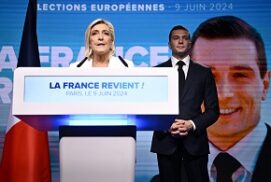
  • Across Europe, far-right parties are gaining ground like never before since World War II, reshaping political landscapes and cultural narratives. From coalition governments to influential parliamentary blocs, their rise reflects deep-seated shifts in societal dynamics. What factors have fueled this surge? How have traditional parties and evolving cultural identities contributed to the far right’s growing appeal? What does it mean for Europe’s future? This dossier delves into the complex dynamics behind the far right’s ascent and the challenges it presents to European democracy.  
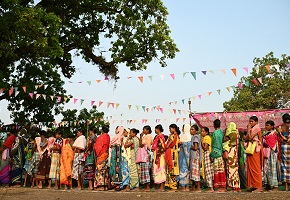
  • India’s general elections kick off today and will be held in phases through June 1, with results to be announced on June 4. Despite a decade-long erosion of rights and the hollowing out of democratic institutions, most polls predict a victory for Prime Minister Narendra Modi and his Hindu nationalist Bharatiya Janata Party for a third consecutive five-year term. What does an India heading to the polls look like in 2024? How has ten years of BJP rule shaped the world’s largest democracy?
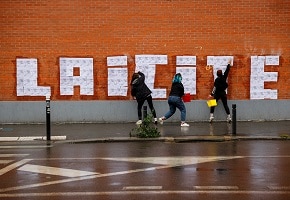
  • The terrorist murder of French professor Samuel Paty in the Paris suburb of Conflans-Sainte-Honorine in autumn 2020 has re-opened a heated debate concerning the liberty of teaching, freedom of expression, and the role of secularism in a pluralist society. What is the specific nature of French laïcité, and how has it changed over time since its juridical establishment in 1905? How does it compare with other Western approaches to secularism and, most critically, with Muslim perspectives on the matter? Why has this provoked a diplomatic dispute between France and Turkey, and more broadly the boycott of French products in many Muslim countries?
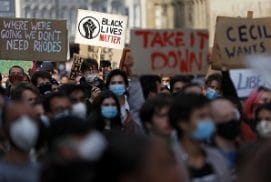
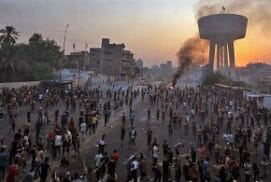
  • Today’s world and tomorrow’s America don’t look the same as they did one month ago. If that is the case, socially and politically, it is not just because of the “revolutionary” power of the Covid-19 pandemic, which has demonstrated its ability to disrupt well-established political leaderships, but also because of a different, human-moved force of change: the global anti-racist revolt which has followed George Floyd’s murder. How will it impact on the US, four months short of a crucial election, and the world? A kaleidoscope of stories, voices and perspectives in this special ResetDoc Dossier.
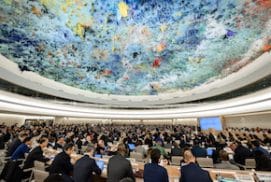
  • Is it truly impossible to reconcile the universality of rights and the specificity of belonging? A trans-national debate stemming from Seligman and Montgomery’s paper “The Tragedy of Human Rights”
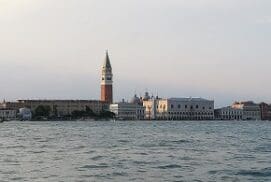
  • Giuliano Amato; Sheri Berman; Mohsen Kadivar, Yael Tamir, Michel Wieviorka. A panel of highly distinguished speakers closed up the last edition of the Venice Seminars organized by ResetDoc and dedicated to the highly pressing challenge of the “dehydration” of the tradional sources of democracy. In order to give the discussions held maximum circulation, the present dossier features the proceedings of the high-level roundtable chaired by Ambassador Pasquale Ferrara, making up a remarkable chorus of voices on the way forward for a true “re-birth” of democracy.
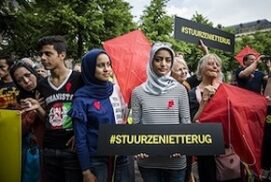
  • In the country once famous for its multiculturalism and its civil rights, today the wind seems to have changed. A new extreme right has appeared and risks changing the political landscape at the next European elections. Thierry Baudet, the leader of the Forum for Democracy, is educated, dandy, histrionic, quotes philosophers and speaks to young people and citizens. In the Dutch populist competition, it seems that Geert Wilders’ star has found a worthy competitor.
Load more
SUPPORT OUR WORK


Please consider giving a tax-free donation to Reset this year

Any amount will help show your support for our activities

In Europe and elsewhere
(Reset DOC)


In the US
(Reset Dialogues)


x