
Dossiers
Today, the compromises that once allowed democracy to coexist with a well-regulated capitalism no longer seem to work. On the contrary, politics is becoming increasingly incapable of offering effective responses to the dissatisfaction and marginalization felt by large segments of the population — the old middle class, precarious and underpaid workers — while capitalist developments, beginning with the new digital economy, are deepening inequality, concentrating wealth and power to a remarkable degree, and showing signs of a retreat from territorial roots. This process of patrimonialization and neo-feudalization combines with autocratic tendencies in political power. The phenomenon is particularly evident in the United States, but it is far from unknown elsewhere, in countries both small (such as Hungary) and large (such as Russia). How should we rethink the relationship between capitalism and democracy? Can liberal democracy survive in an age of stagnation and widening inequality? What held the welfare state and the free market together in the postwar years—was it a unique historical interlude or a model that can be replicated? Has globalization now made the mechanisms of financial capitalism incompatible with national democratic processes? Are liberal elites to blame for failing to manage the economic transformations—globalization, offshoring, automation—that have fueled populism and authoritarianism? And is it still possible to correct course within the existing system, or does the moment demand a radical reconfiguration—and if so, how?
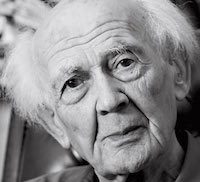
  • Zygmunt Bauman died yesterday at the age of 91. His death marks the loss of one of the most distinguished European intellectuals. Bauman gained widespread acclaim for his capacity to give a voice and language to contemporary social configurations. The end of Fordism – the main theme of Bauman’s work in the last few decades – as well as the transition to a “liquid society” have dominated his reflections and, due to his work, now appear to us as common sense.  His last essay for Reset-Dialogues on Civilizations was about Trump: “The strongmen and the anxious class”.
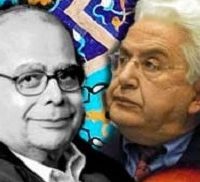
  • Sadiq Jalal al-Azm was born in Damasus in 1934 and died in Berlin on December 11th 2016 following a battle will illness. He was one of the most prominent and influential Muslim philosophers and thinkers of the last century. His books, articles and essays inspired a whole generation of liberal scholars, “good liberals”, as defined by Mohammed Hashas, that are not blind to external hegemony and internal state oppression. He has lived in changing societies and he continued to critically analyse them till the end, Reset Doc have had the honor to publish some of his thoughts and to host him as a speaker at the Istanbul Seminars in 2010. In this dossier we present both new analysis and testimonies from our archive of his work.
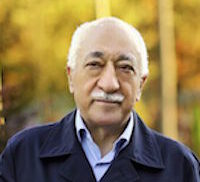
  • After the coup, the two principal actors in Turkey have been the current President, Recep Tayyip Erdogan, and the multi-billionaire and Islamic ideologue, Fetullah Gülen, who has been in self-imposed exile in the United States since 1998. Much of what one has to know about Gülen’s media empire is in this monograph from 2015. Reset DoC’s articles try to analyze this ongoing process and its actors: Erdogan with his new authoritarian tendencies and Gülen with his global media network. The international academic, intellectual community ask the US government and the European Union to stop Erdogan’s authoritarian and violent grip on the country.
  • The uprisings that led to the downfall of regimes in Egypt, Tunisia and Libya in 2011 initially seemed to herald the end of a state system introduced into the MENA region by imperialist powers after WWI. Characterized by an authoritarian model of modernization and secularization from above, the fall of these XX Century regimes opened the door to the rise of political Islam. But when Islamist parties that have come to power in Egypt and Tunisia, although with remarkable differences, they have proven unsuccessful in stabilizing governments and writing new constitutions. Are democracy and a religious revival compatible? What will replace the spent legitimacy of these regimes across the region? What kind of state could now take shape in Muslim contexts overturned by revolts and civil war? And what place will religion have in these states?
  • Family is one of the most “natural” and fluid social constructs of human history and can be easily affected in different ways by social, cultural and religious changes. So why does the pluralisation of ways of forming a family seem to be a new phenomenon, and such a radical one, that to some it appears to be a risk as far as social cohesion is concerned? This question inspired the conference organized by Reset-DoC on “Family regulations in a society with fluid borders”, from which the following papers were drawn. Here, we are trying to understand new ways of conceiving and creating family in our globalized world, as well as the transformations occurred in the definition of citizenship and the legal framework behind new “types” of families.   
  • Three great Arab intellectuals – Nasr Hamid Abu Zayd, Mohammed Abed Al-Jabri and Mohammed Arkoun – died in 2010, shortly before the outburst of the Arab Springs and in the midst of an identity crisis that is tearing apart the Muslim world, in a region beset with complex questions related to identity, religion’s place in society and politics, modernity, the democratization process, the status of minorities in Islamic societies and the concretization of a borderless Maghreb and Mashrek. Six years later, many of the important open questions that have for so long plagued this part of the world, have not yet been resolved. However, the intellectual and moral legacy that arises from the life-long work and commitment of these three thinkers can still help us understand and imagine a way out of the darkness.
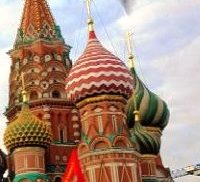
  • Can we say that what is under way in Today’s Russia is a process of “Re-composition” of a Moscow-dominated political space, twenty-five years after the collapse of the Soviet Union? Reset-DoC publishes the edited transcripts of the conference talks given in Berlin last June by Marlene Laruelle, Giuliano Amato, Toomas Hendrik Ilves and Karel von Schwarzenberg. The aim of Reset-DOC’s conference was to analyse the political culture of today’s Russia as well as Russia’s ideological trajectory over the last twenty-five years, when Russia seems to have developed a new version of the “power state” that dominated European history until the end of the 20th Century. Other speakers at the roundtable included Jörg Lau and Manuel Sarrazin, the Director of Reset-DOC Giancarlo Bosetti chaired the meeting.
  • The popular uprising against Hosni Mubarak’s regime opened the Egyptian public sphere up to various groups and movements, but the military intervention in July 2013 has allowed the government to take a number of measures aiming at regaining state control over the public sphere. Reset-DoC’s new articles offer an in-depth analysis of this ongoing process and its actors: four years after Tahrir, digital mass-surveillance, renewed pressure on civil society and on the media, as well as the “Egyptianization” of the war on terror, are rapidly restricting the country’s public space and threatening human rights.
  • The Moroccan philosopher Mohammed Abed Al Jabri (27 Dec. 1935 – 03 May 2010) has marked contemporary Arab and Islamic thought with his voluminous works of categorizing and systematizing the tradition. The author of La Critique de la Raison Arabe raised critical issues that he considered existential for intellectual and political renewal in the region. On May 5th 2015 Reset-DoC and its partners organize an “Al Jabri Day” in Rome, Italy, with lectures and contributions in honor of this great Moroccan philosopher and founding father of critical thought in contemporary Arab-Islamic philosophy.
Load more
SUPPORT OUR WORK


Please consider giving a tax-free donation to Reset this year

Any amount will help show your support for our activities

In Europe and elsewhere
(Reset DOC)


In the US
(Reset Dialogues)


x