

Videos
-
 15 November 2011
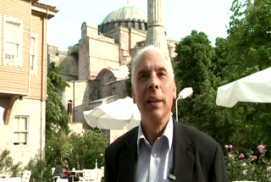
 - 11 October 2011TURKEY – What consequences will there be for the country’s political and social situation following the resignation of Turkey’s chief of staff and highest-ranking military officers? According to Soli Özel, a political analyst and professor of international relations at the Bilgi University and Kadir Has University in Istanbul, these resignations are the culmination of a demilitarization process in Turkish politics that has lasted for almost ten years. Erdoğan’s Justice and Development Party seems to have managed to overturn – to the advantage of civilian authorities – the previously unshakable power of the Turkish military in politics, mostly in the name of defending secularism. Even when faced with the Arab Spring and the Israeli-Palestinian conflict, the Turkish government has assumed advantageous positions, even recently defending state secularism. Soli Özel analyzes the new Turkey and its international relations, from Syria to Libya to the United States, identifying Turkey’s strategies and objectives as it furthers its new and already decisive political global role.Soli Özel was interviewed by Giancarlo Bosetti in Rome on September 12th, 2011.Read the full interview here
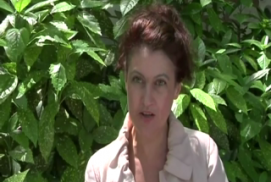
- 30 September 2011Many women were in the front lines of protests during the Arab spring, says the feminist Nouzha Guessus, co-promotor of the Mudawana, the new progressive Moroccan family law. Moroccan women have fought against authoritarianism and lack of freedom, for democracy and to improve the economic situation, but now they are afraid that the right to an equal treatment and the right to be citizens will be once again forgotten. Nouzha Guessous speaks to Resetdoc during the Istanbul Seminars 2011.
- 16 September 2011The debate about immigration started just after the oil crisis of 1973. It was the end of the years of prosperity in Europe, prosperity that was brought by an enormous influx of migrant labor. Once the oil crisis was set, suddenly immigration became a problem. Twenty years later, immigration has started to be conflated with Islam, and the real “problem” has now become Islam. Why? And where are our responsibilities? During the Istanbul Seminars 2010, we have interviewed Gil Anidjar from Columbia University.
- 28 July 2011Feminist efforts made by a younger generation of educated, modern Muslim women pass in particular through the re-appropriation and re-interpretation of the Qur’an and the prophetic traditions, says the Indian sociologist Irfan Ahmad. He has studied the evolution of the discourse about women within the Indian neo-fundamentalist movement Jamaat-e-Islami. He has spoken to Resetdoc during the Istanbul Seminars 2010.
- Nasr Hamid Abu-Zayd 18 July 2011According to the Qur’an God created human beings in nations, tribes, with different colors and different languages in order to know each other – human beings know themselves by communicating and understanding the Other. Historically Islam is the spiritual and ethical call for social justice. The Qur’an is about the poor and the needy. And it is about the Other. On the anniversary of his death, ResetDoc remembers the great Egyptian philosopher Nasr Hamid Abu Zayd with this interview.
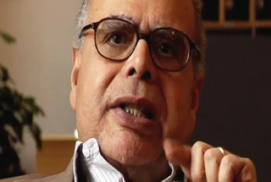
- 13 June 2011A process of secularization is taking place in the Muslim world. People hope for human rights, political and economic participation, and social fairness. At the same time, many of these same people refuse to become, or to define themselves as, secular. The reasons for this refusal are numerous: misunderstanding, mistranslations into atheistic terms, fear of loss of religion and identity, but also the cruel memory of tyrannical secular governments and elites taking advantage of the benefits of economic modernization for themselves.Moroccan philosopher and former director of Aga Khan University, Abdou Filali-Ansary, talks to ResetDoC at the Istanbul Seminars.
- 18 May 2011To be competitive in a globalized world, countries have started to deregulate and liberalize their economies, states have given up their responsibilities for economic policies, and individual citizens have become entirely responsible for their survival. To what extent is today’s growing xenophobia, nourished by widespread politics of fear, linked to this age of economic uncertainty? On the occasion of the Istanbul Seminars, ResetDoc has interviewed Albena Azmanova on these issues.
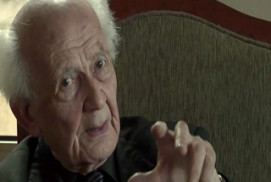
- 18 May 2011Modernity has two powerful characteristics that constantly produce redundant people, who can’t be accommodated—the people that don’t fit. The first is the order-building characteristic: modernity is obsessively ordering a chaotic reality. Inevitably this produces conflicting loyalties, diasporas and migration, since there are redundant people, who don’t fit the image of order prescribed by modernity. The second characteristic is economic progress, which makes human labor less and less valuable, so that people lose their skills and personal capital and need to move elsewhere. The great sociologist Zygmunt Bauman talks to ResetDoc about Europe, migrations and modernity.
- 18 May 2011This enlightened Muslim philosopher explains why the call for the implementation of Shari’a has become stronger and more widespread. At the same time changes and a liberal intellectual revolution have been going on within the Muslim world: involving not a movement but individuals rethinking a new Muslim consciousness. The Moroccan philosopher and former director of the Aga Khan University, Abdou Filali-Ansary talks to ResetDoC at Istanbul Seminars.