

Videos
- 4 February 2013Many are now wondering whether organized forces in Cairo will take over the revolution, as happened a century ago when the Bolshevik fringe of Russian revolutionaries took hostage the spontaneous and plural movements, imposing its own purposes and ideology. Is this fear justified? Does this comparison with the October Revolution make sense? What instead remains of the wave of protests that swept across Israel in the summer of 2011? There too the better organised and conservative forces seem to have got the better of the spontaneity of those movements. Is it after all possible to envisage serious change without organisation? At the Istanbul Seminars held by Reset-Dialogues, in May 2012, we posed these questions to Israeli philosopher Avishai Margalit. An interview by Nina zu Fürstenberg
-
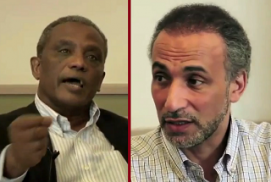
 11 January 2013Two of the most influential reformers from “within” Islam, Tariq Ramadan and Abdullahi An-Na’im are discussing what shari’a is and should be: a set of principles and morals for believers, never a body of law to be enforced by the State? Both wish democracy, equality amongst citizens, human rights. But they also disagree: Tariq Ramadan believes shari’a should be named in the Arab constitutions as Muslims draw principles of justice for change from within their own tradition and religion. For An- Na’im, on the contrary, the religious needs to be kept far from the political: only a secular state can guarantee the realization of the Islamic objective of justice in Muslim societies.
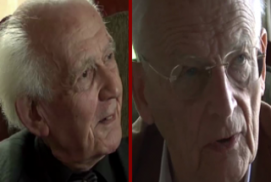
 - Europe in a Global World – This conversation between Zygmunt Bauman and Alain Touraine took place in Reset-DoC’s Istanbul Seminars.
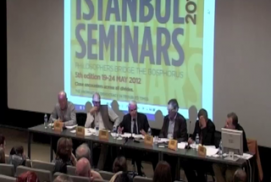
- 7 June 2012The second Roundtable of Reset-Dialogues Istanbul Seminars 2012 (May 19-24 2012) “The promises of democracy in troubled times” took place on Sunday May 20th, 2012 at Istanbul Bilgi University. Former President of Iran, his Excellency Seyyed Mohammad Khatami, sent us his paper about Overcoming Postcolonialism: from the Civilizational Dispute to the Renewal of Dialogue. In this roundtable, Giuliano Amato, Giancarlo Bosetti, Alessandro Ferrara, Ali Khoshroo, Ramin Jahanbegloo and Roberto Toscano discussed this subject. The next roundtables will be screened online soon.More info about Istanbul Seminars 2012 here
- 1 June 2012The fourth Roundtable of Reset-Dialogues Istanbul Seminars 2012 (May 19-24 2012) “The promises of democracy in troubled times” took place on May 22nd, 2012 at Istanbul Bilgi University. Seyla Benhabib, Craig Calhoun, Fuat Keyman, David Rasmussen and Joseph LaPalombara discuss the subject “Are Democracies still sovereign? The Challenge of Transnational Institutions”. More roundtables will be screened online soon.More info about Istanbul Seminars 2012 here
- 8 May 2012Resentment and reciprocal fear seem to be increasing in Europe in response to the economic and demographic crisis, and to minorities – often identified with the Muslim “other” – demanding more public visibility. Nevertheless, if we want true integration for minorities, we need to acknowledge this often extreme conflict as a phase, but a necessary phase, of an integration process, says Italian Sociologist Stefano Allievi, interviewed during the 2011 edition of ResetDoC’s Istanbul Seminars. In conflict you deal with other actors, which are actors who change their minds through conflict. Conflict is socially dynamic, not static, and we must deal with it step by step.
- 13 March 2012“If a state claims to be Islamic and imposes a particular view of Islam, it is denying my freedom to disagree. And that is why we need a secular state”, says Abdullahi An-Na’im, a leading scholar of law and Islamic jurisprudence. Resetdoc interviewed him during the 2011 edition of our Istanbul Seminars.“Shari’a is a human endeavor to understand the divine, but it remains human, and every believer is accountable for her or his understanding,” explains Dr. An-Na’im. “Hence, any honest Muslim needs human rights: freedom of belief, freedom of association, freedom from oppression, the right to debate, to contest and to dissent. Since every Muslim is only supposing or guessing, none has a superior claim to the truth of what Shari’a is.”In fact, “in the intellectual Islamic tradition Shari’a was understood as zanni, i.e. suppositional. This is a good state of being,” says the Sudanese-American philosopher, “because certitude would inevitably tend to authoritarianism, oppression and domination of others because ‘you’ have the truth as Got revealed it. And logically, the possibility of being a Muslim, the possibility of belief requires the possibility of disbelief : if I am not free to believe, there is no value do my belief. For this reason, creating conditions in which I keep the freedom to believe or not to believe is critical to the possibility of being a Muslim. I need the state to be secular so I can be the Muslim I choose to be by conviction.”
- 11 January 2012
- Fuat Keyman 23 December 2011The EU-Turkey integration process and the EU institutions have opened up spaces to empower people, particularly Kurds, to fight for their rights and freedom within their own country. So behind the state-state relationship we see the importance of the EU integration process for third party countries. But how does this process affect the Kurdish, or “multicultural” issue in Turkey? And how will it be possible to recover the relationship between Turkey and the EU? Resetdoc has asked Fuat Keyman, a leading Turkish political scientist and Director of Istanbul Policy Center, Sabanci University.
- 22 November 2011Over the long history of our species, human beings have developed complex forms of identity, which make it possible to live together, says Ghanaian-British philosopher Kwame Anthony Appiah , chosen by Le Nouvel Observateur as one of the 25 most important thinkers of our time. Identities change, but they are not replaced with nothing: they are replaced with changed identities. The modern economic environment requires us to live together, so we have to develop forms of identity that draw on the narratives from the past, that draw on traditional identities. But, we have to be imaginative about drawing on the past, about imagining the bits of the past that are useful to us. Identities and cultures are in constant flux, and we must draw on narratives from the past to create the common identities of the future. We interviewed Kwame Anthony Appiah during our Istanbul Seminars 2011. Watch the second part of this interview: “Culture Crosses Boundaries”