

Videos
-
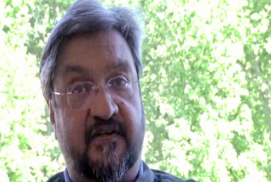
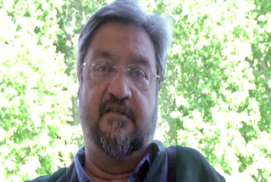
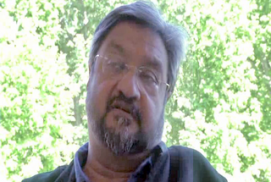
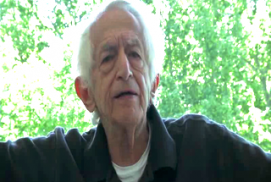
 26 May 2015According to Rajeev Bhargava, interviewed during the Istanbul Seminars 2014, Ashoka’s 7th edict is a lesson about public political morality in deeply diverse societies. It encourages people to evolve in their own respective religious-philosophical perspectives towards a mutual moral growth, by which the Other can be enriched. Today, we call this notion pluralism. Toleration, on the other hand, encourages living back to back with a lack of mutual interaction.
 - 26 May 2015“We are all incomplete in some ways,” says Rajeev Bhargava. “In order to enrich ourselves and to complete ourselves, we need to mutually communicate with each other all the time.” Bhargava references the work of the Maurya Dynasty emperor Ashoka. In Ashoka’s ideal world people should mix and practice dhamma: listening to a plurality of voices, controlling the tongue, being critical – but with moderation. In the 3rd century BCE, Ashoka wrote the 7th edict, an ethical guide to pluralism, which is still valuable today. For Bhargava, interviewed during the Istanbul Seminars 2014, the edict was not about living back to back, but face to face in search for a common ground.
- 26 May 2015Rajeev Bhargava, a Professor at the Center for the Study of Developing Societies in New Delhi and a scholar of issues concerning secularism, constitutionalism, and multiculturalism, looks at India during the 3rd century BCE to analyze the major social and intellectual transformation that took place under Ashoka’s rule. Bhargava contends that ritual sacrifice lost importance for a transcendental view in which the Other, the community, became of value. In his legendary edicts, Ashoka engaged in finding answers about how to live together in spite of difference. Bhargava was interviewed during the Istanbul Seminars 2014.
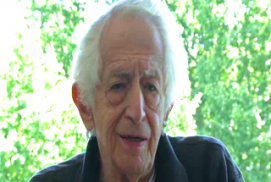
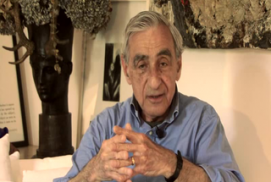
- 27 March 2015Part 2 – Since World War I, every major political event has created masses of refugees and immigrant. As entire populations move, strong reactions are often triggered amongst native people. Cultural pluralism developed out of the need for an ethos that could meet differences and recognize how other cultures enrich society. “Recognition of cultures enriches society,” says Richard Bernstein, interviewed during the Istanbul Seminars 2014. “It is not a threat to society.” – Watch Part 1 of this video
- Richard J. Bernstein 27 March 2015Part 1 – “The doctrine of pluralism became important against the notion of the melting pot,” says Richard Bernstein, a professor of philosophy at The New School. Developing in America as a reaction to forms of ethno-cultural monism that emerged during the great immigration waves, the doctrine of pluralism stands in opposition to a conception of “American” identity modelled on the figure of the white Anglo-Saxon protestant. Professor Bernstein, interviewed during the Istanbul Seminars, argues that democracy encourages recognition of cultural differences in sort of ‘overlapping unity.’ – Watch Part 2 of this video
- 10 March 2015“Many from my generation believed that religion would disappear,” notes Michael Walzer, editor emeritus of Dissent magazine and Professor at the Institue for Advanced Study in Princeton. “Instead, it came back: politicized, modern, militant and anti-liberal.” In secular nations such as Algeria, India and Israel, we can observe a violent return to religion. What happened? Michael Walzer, interviewed by Reset-DoC, asks: “Was it a mistake not to engage critically with religious culture?”
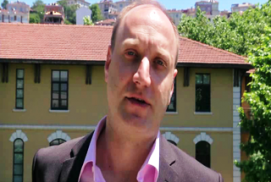
- 10 February 2015Part 2 – Republics, kingdoms, and semi-authoritarian presidential systems all enforce state oversight over religious affairs. But “why do even Islamist governments reinforce control over religion?” asks Jonathan Laurence, political scientist at Boston College. “To keep politics out of the mosques? To seek a neutral public space in order to gain more political influence?” Interviewed during our Istanbul Seminars 2014, Laurence contends that while these aspects may be true, Islamists also fear that the rule of law is threatened by their more radical counterparts. Watch Part 1 of this video
- 10 February 2015Part 1 – In the 1950’s, many states in the Muslim world denied religious realities as they concentrated on modernization. According to Jonathan Laurence, interviewed during the Istanbul Seminars 2014, a secular population was forced into existence, in turn triggering a religious and traditionalist backlash. Political participation has opened the way for religious parties but democratic discomfort is still strong. Laurence advocates patience: this is a world still under assessment. Let’s not forget how long it took to judge the French Revolution. Watch Part 2 of this Video
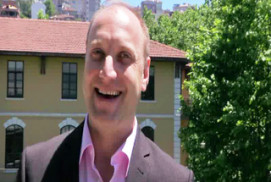
- Mustafa Akyol 23 January 2015Is Islam compatible with liberal democracy? Yes, contends Mustafa Akyol in an interview from the Istanbul Seminars 2014, but it needs effort in re-thinking and re-interpreting Islamic thought, and the will to do so. Islamic medieval history is full of examples of pluralism.Watch part 1 of this video: “Turkey, the trap of power” – Watch part 2 of this video: “About the Gezi movement”
- Mustafa Akyol 23 January 2015“In Turkey, the religious conservatives had been ridiculed and oppressed by an authoritarian secularism. Now they are in power and the fear to lose it makes them paranoid and aggressive. But the Gezi movement has been a positive input for Turkey’s democracy,” explains Mustafa Akyol, interviewed during the Istanbul Seminars 2014. Watch Part 1: “Turkey, the Trap of Power” – Warch Part 3: “Pluralism and Liberal Democracy”