Pasquale Ferrara 13 February 2026
united-nations
-
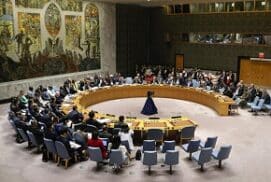
- Daniele Archibugi 30 June 2025It is certainly surprising that, in the middle of major international conflicts (such as the Russian invasion of Ukraine, the repeated massacres in Gaza, and the Israel–Iran war), the United Nations Security Council has not been able to play the role of mediation that the UN Charter contemplated. The UNSC has gathered daily, and its permanent and elected members have discussed both minor and major crises, but without being able to agree on any Resolution regarding the most important events. By itself, this would not have been a major change: in the Cold War, many UNSC Resolutions were blocked by either the USA or the USSR veto. For far too long, two major blocks operated in opposite directions: on one side, the liberal democracies led by France, the United Kingdom, and, above all, the United States, and on the opposite side, the Soviet Union – and later Russia – supported by China.
-
- Matteo Fraschini Koffi 24 March 2022Political, economic and cultural factors are influencing the positioning of African countries, and citizens, towards the conflict. Here’s how.
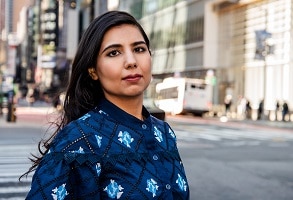
- Simone Disegni 21 May 2021As the UN looks to nominate its next Secretary General, Arora Akanksha, 34, is running a self-built campaign for the post.
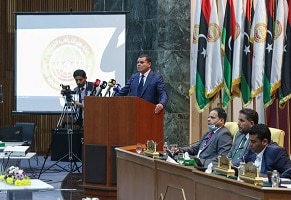
- Federica Zoja 15 March 2021The UN-sponsored Geneva talks have led to a new unity cabinet led by Abdul Hamid Dbeibah. Challenges ahead and unconvincing first moves.
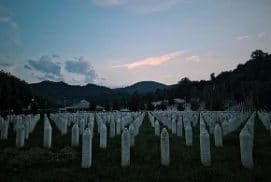
- 10 July 2020Twenty-five years later, the phantom of nationalism has not disappeared, in the Balkans just like in Europe
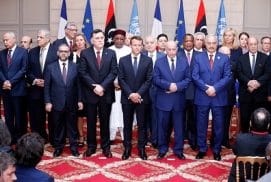
- Moncef Djaziri 22 November 2019Two presidents of the Libyan Central Bank (each one printing its own bills), practically two national oil companies with two distinct policies for the management of oil resources, two governments, and two parliaments. Despite the UN’s efforts, the contending Libyan parties have no yeat reached an accord, isn’t the road of dialogue and diplomacy leading to a stalemate?
- 22 April 2011In recent days the UNHCR has invited donor countries to provide the necessary financial assistance needed for humanitarian aid in Libya and neighbouring countries. In the meantime it continues to work with local agencies on the shores of the Mediterranean. In some cases work also consists of searching for people who have taken to the sea and for whom all trace has been lost.