
russia
  • Ilaria Romano 11 June 2026
    Turkey is home to several Crimean Tatar communities and cultural centers capable of connecting every newcomer with the wider diaspora. Following Russia’s annexation of Crimea in 2014, the networking efforts carried out not only in Ankara but also in other Turkish cities became essential for welcoming new arrivals, not merely for maintaining ties with the homeland and preserving cultural identity.
  • Ilaria Romano 10 June 2026
    The 1944 deportation left an indelible mark on the history of the Crimean Tatars. It is estimated that at least 200,000 people were forced to leave within just two days, while a policy of erasing traces of the Crimean Tatar presence was launched across the peninsula, from replacing the original names of towns and villages with Russian ones to destroying schools, libraries, and mosques.
  • Andre Diniz Pagliarini 17 December 2025
    For months, U.S. naval forces have been gathering off Venezuela’s coast. The warships, the bomber flyovers, and the rising volume from Washington are not incidental. The likelihood of an actual intervention is not incidental. It is in line with the administration’s recently presented geopolitical priorities. The new National Security Strategy, released earlier this month, explicitly elevates the Western Hemisphere as a central arena of U.S. national security, linking migration, narcotics trafficking, and regional instability to the defense of the homeland.
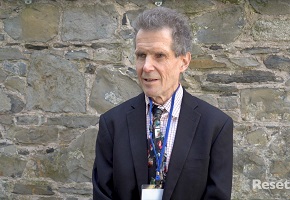
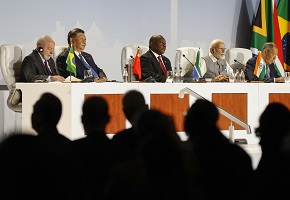
  • As the war in Ukraine drags on and Vladimir Putin presents himself as the architect of a “new world order” alongside Xi Jinping and Kim Jong-un, Reset DOC spoke with Stephen Hanson, a leading American political scientist and expert on Russia and authoritarian regimes. Hanson is Professor of Government at the College of William & Mary and has previously served as director of Harvard’s Davis Center for Russian and Eurasian Studies and of the Reves Center for International Studies.
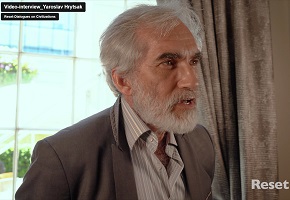
  • Yaroslav Hrytsak 11 March 2024
    Post-Soviet Ukraine has been considered a classic case of a “cleft country” torn between the agrarian Ukrainian-speaking West and the industrial Russian-speaking East. The Russian-Ukrainian war has revealed that despite strong regional divisions, Ukraine proved to be a very resilient political community, which led to the emergence of “the third Ukraine.” It is a Ukraine of neither the West nor the East, but of the Center, meant both in regional and political terms, as highlighted by Professor Yaroslav Hrytsak (Ukrainian Catholic University, Lviv).
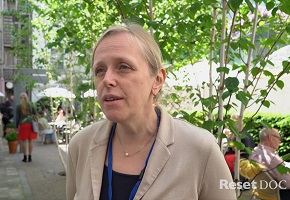
  • Anna Colin Lebedev 23 February 2024
    How can a war between two communities start without those two communities being involved in a conflict that preexists the war? And how is it that these communities eventually make sense of the conflict as something that is deeply socially rooted? Anna Colin Lebedev, Professor of Sociology at the Université Paris Nanterre, gives her assessment of the social roots of the war between Russia and Ukraine.
  • Pieter Judson 23 January 2024
    “Most empires, but also most nation states are multicultural. The problem with the nation state is that it claims to be the state of one group. But all nation states include many groups. So we must ask the question, how are the minority groups treated? Do they have full citizenship? Often they do not.” From ResetDOC’s latest video-interview to Pieter Judson, Professor of 19th and 20th century history at the European University Institute. It was shot on the margins of Reset DOC’s Dublin Conference 2023, “Nationalism, Nation-Building, and the Decline of Empires.”
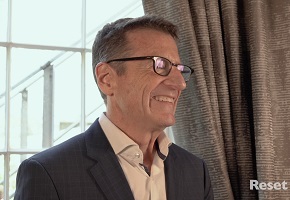
  • Mark Kramer 5 January 2024
    What was the parable that led Soviet internationalism to Putin’s personalist nationalism? How can we imagine a post-Putin Russia? Mark Kramer (Davis Center, Harvard University) answers to these questions in this video-interview shot on the margins of Reset DOC’s Dublin Conference 2023, “Nationalism, Nation-Building, and the Decline of Empires.”
Load more