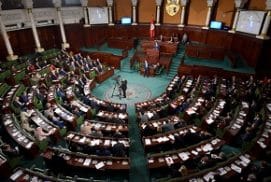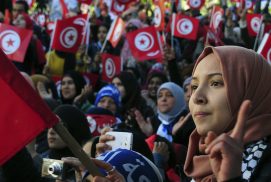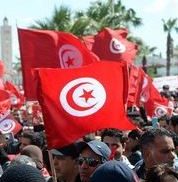

“The monarchy was abolished at the behest of the people. It was because of that same will of the people that the Tunisian Republic was born.” It was with these words that, on July 25th, 1957, the president of the Constituent Assembly, Jellouli Fares, officially announced the beginning of a new era for Tunisia.
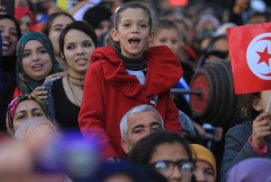
Two weeks ago, Tunisian security forces used excessive force to try to stop peaceful demonstrators in El Kamour Tataouine, killing one of them. Six years after the 2010-2011 uprising, many Tunisians are wondering what is left of their revolution
Tunisia is known as the birthplace of the so-called Arab Spring. It was the country that witnessed the first popular uprising leading to the overthrow of an established government in the Middle East and North Africa in the 21st century. The Tunisian revolution was the spark that ignited and inspired other revolutions in the region. But Tunisia is also the country that has more or less succeeded in insuring a peaceful political transition.
The revolutionary atmosphere is everywhere in Tunisia. According to some, the real revolution has only just begun, and in the widespread chaos, there are many who have clear ideas both about the future and about Tunisia’s identity. It is sufficient to glance at Facebook, where on many ‘walls’ one can read messages such as: “We are Muslims not Islamists.” “We are moderates and not extremists.” “We dream of democracy.”
By Nicola MissagliaAs for the Sudanese philosopher Abdullahi al-Na’im, issues linked to democracy and human rights in Islam are central in the ideas expressed by Ahmad Moussalli, a professor of Political Science and Islamic Studies at the American University in Beirut.
We use cookies to ensure that we give you the best experience on our website. If you continue to use this site we will assume that you are happy with it.Ok