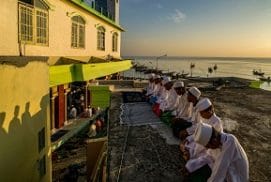
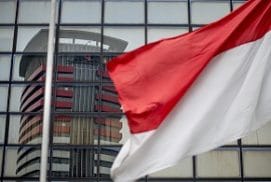
Are Indonesian democracy and pluralism being endangered by the revitalization of radicalism and the increasingly invasive presence of extremist Islamic groups?
In persistently developing a model for coexistence able to peacefully contain social unrest and radical Islamism, Indonesia has been able to emerge headstrong from years of difficult dictatorship and positively react to the late-nineties financial crisis. Although Indonesia has painted a bright and prosperous image of itself, it carries behind it a thick and oppressive shadow.
Germany is not immune to the phenomenon of religious radicalism. Over the past six years, about one thousand foreign fighters have left Merkel’s country for Syria and Iraq to join ISIS and other terrorist groups.
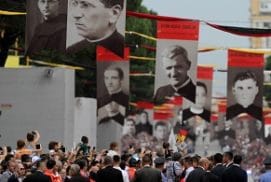
Preserved in the library of the Catholic seminary in Shkodër are a number of the very few books which have survived the blaze set alight by communists at the immediate aftermath of the war.
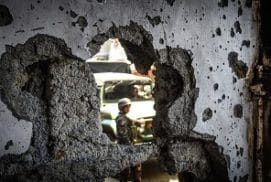
On May 23, 2017, hundreds of Isis-inspired terrorists swiftly gained control of Marawi City in Mindanao, the Philippines’ southernmost archipelago. The terrorist offensive came in response to the attempted arrest of Isnilon Hapilon, leader of the Islamic terrorist group Abu Sayyaf, on behalf of the Armed Forces of the Philippines (AFP).
We can start from violence and its presence in the Holy Texts. Some people say that insisting on the violence of the Bible is typical of antisemitism as much as doing the same about the violence in the Qu’ran is typical of Islamophobia. But this is not the case: there are many things there as human sacrifice or lapidation that our mind cannot today accept.
With Trumpism, a kind of virulent racism and sectarianism in public discourse in the name of a response to political correctness raised in the form of Islamophobia
We use cookies to ensure that we give you the best experience on our website. If you continue to use this site we will assume that you are happy with it.Ok