
iraq
  • Undoubtedly, 2011 was a turning point in the history of the Arab region. The 2011 popular uprisings in Tunisia, Egypt, Yemen, Sudan, Libya, Syria, and, to a lesser extent, Morocco, were followed by another wave of such uprisings in Algeria, Iraq, and Lebanon in 2019. The genocidal war raging in Gaza since 2023 has taken the region to a yet deeper abyss in existential, moral, political, and economic terms. How have thinkers of the region been interacting with these upheavals? How have these dramatic events impacted the intellectual scene of the region?
  • Ilaria Romano 2 September 2024
    Brother Wissam drives his pickup truck to the convent where he lives alongside other Franciscan friars. He’s on his way back from Erbil, the capital of Iraqi Kurdistan, where he picked up his nephew Francius, 19, on vacation in Iraq on his own for the first time. Like many Christian Iraqis, especially ordained ones, Wissam studied abroad for a few years, but never considered leaving his country permanently. The city he calls home is Qaraqosh (in Syriac) or Bakhdida (in Arabic), thirty kilometers from Mosul, the symbol, since 2014, of the Islamic State’s fury against Christians.
  • Ilaria Romano 7 August 2024
    Since the end of the war of liberation against ISIS in 2017, Iraq has experienced a situation of relative stability, meaning the absence of open conflict, regularly undermined by internal and regional crises. Involved in the tensions between Iran and Israel since the beginning of the war in Gaza, due to the ties of Iraqi Shiite militias with Tehran, the country has also worsened its relations with the United States, which still maintains military outposts on its territory
  • Anna Tito 1 December 2017
    Although, in many ways, the reasons for which many recently converted young men decide or have so far decided to go and fight with “God’s fanatics” in Syria and Iraq remain mysterious, those same choices made by girls born and raised in a ‘western’ environment in Europe “totally bewilders us”, admits the sociologist Farhad Khosrokhavar in his interview with Reset.
  • Ilaria Romano 25 October 2017
    It took no longer than two days to bring the territory back under the control of the Regional Government of Kurdistan at the end of 2014. In the space of 48 hours, the Iraqi army and the Hashd al-Shaabi shi’ite militia integrated into it took control of Kirkuk, it was swiftly followed by the recapture of Dibus, Makhmur, Khanaqin, Jalawla, Gwer, Bashiqa and Sinjar.
  • Chiara Cruciati 13 May 2016
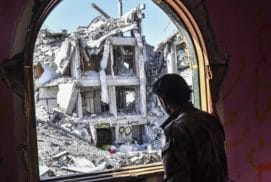
    Dust, ruins and entire districts burned to the ground; that is today’s Ramadi, the Sunni city that is the capital of the very turbulent Anbar Province. Freed by the Iraqi army at the end of last year, it now looks like a ghost city. Satellite photographs published in recent days by the Associated Press show the extent of the devastation, with over three thousand buildings destroyed, 400 roads seriously damaged, bridges reduced to dust and collapsing infrastructure. About 800 civilians have died in Ramadi and the challenge faced is now a political one.
Load more
SUPPORT OUR WORK


Please consider giving a tax-free donation to Reset this year

Any amount will help show your support for our activities

In Europe and elsewhere
(Reset DOC)


In the US
(Reset Dialogues)


x