
india
  • Floriane Bolazzi 18 October 2018
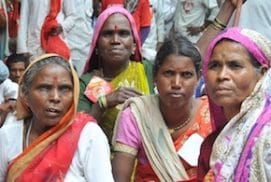
    At the origins of the anger of the Indian farmers is a complex combination of deep agrarian crisis coupled with a lack of opportunity outside of farming sectors. The feelings of injustice are compounded by a sense of exclusion from Narendra Modi’s India Shining campaign since 2014. Now, in the run-up to national elections in 2019, peasants’ demands generally enjoy public sympathy and widespread support — instilling some fears of a possible upset within the ruling party.

  • Mujibur Rehman 26 June 2018
    Post-2014,  cow vigilante groups have emerged as the most prominent non-state actors in India in terms of their capacity to unleash violence. They strike at will even in regions not governed by the Bharatiya Janata Party (BJP).
  • Mujibur Rehman 29 May 2018
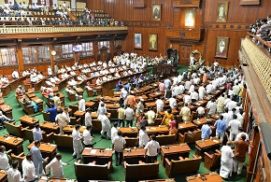
    The Karnataka election results once again perpetuate a disturbing trend regarding the decline of Muslim representation in various Assemblies where the Bharatiya Janata Party (BJP) has emerged a dominant force. The number of MLAs is just seven in a State where Muslims make up 12.91% of the population. The decline from 2013 is mainly owing to the BJP’s continued strategy of not fielding Muslim candidates, although it has emerged as the single largest party with 104 members.  
  • Mujibur Rehman 25 January 2018
    Known for his work on identity politics and political economy, Dr. Rehman most recently published ‘Communalism in postcolonial India′, which addresses the rise of religious fundamentalism in India. In Bonn to lecture on cow vigilantism, he spoke to Roma Rajpal Weiss about the situation of the sub-continent’s Muslim minority.
  • Ananya Vajpeyi 6 July 2017
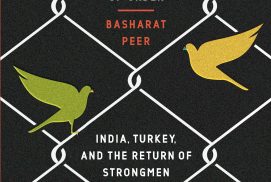
    All nationalism involves some historical sleight of hand, in choosing what to include and what to exclude while constructing a narrative of the nation’s past, and a shape of its essential identity.
  • Shaikh Mujibur Rehman 10 November 2016
    The expansion and consolidation of the Hindu Right’s political power has raised legitimate concerns about the future of India’s secularism. While criticism of secularism could be found in the public debate during the anti-colonial struggle, the sustained assault on it became particularly apparent during the Ayodhya movement. During the late 1980s and 1990s, the public campaign led by the Bharatiya Janata Party (BJP) advocated that the practice of secularism has led to the appeasement of Muslims. The BJP further argued that it has been quite harmful to India’s democratic polity because it has been institutionalising vote-bank politics, and that what is needed is in fact an attempt for a ‘positive’ secularism as opposed to ‘negative’ secularism. While these distinctions were widely used during those days, surprisingly it has vanished from the political lexicon of the Hindu Right in recent years.
Load more