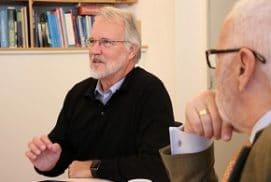
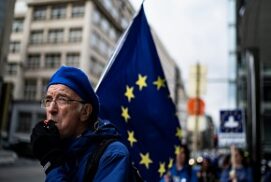
One of the most renowned American social scientists, Craig Calhoun discusses lessons learnt from the Brexit saga, and the challenges ahead to save democracy.
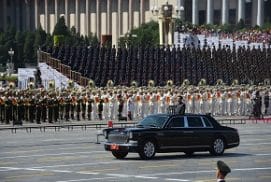
As Beijing grows increasingly assertive in world affairs, two peripherical territories expose its legitimacy dilemma. But the Western liberal democratic model is equally in crisis, prof. Seán Golden argues.
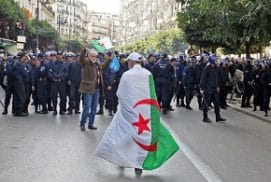
Among mass protests and low voter turnout rates, Abdelmadjid Tebboune emerges as the new Algerian president. The staggering influence of the generals in politics still makes a democratic transition the least likely scenario for Algeria. The future of this country still remains difficult to predict.
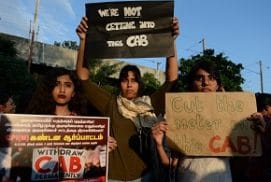
The controversial Citizenship Amendment Bill (CAB) is widely seen as a frontal attack on the secular character of the Indian Constitution, the principle of equality, and it openly discriminates against the Muslim minority. Is India turning into a Hindu’s nationalist state?
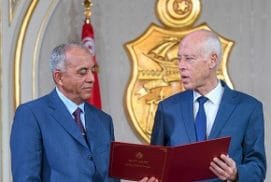
Two months after the elections in Tunisia, Prime Minister Habib Jemli has to deal with a fragmented parliament. As no party achieved the necessary 109 seats to ensure the absolute majority, the risk of “ungovernability” remains high. An uphill start for the youngest Arab democracy.
The reemergence of nationalism is a sensible response to the changing social, political and economic circumstances rather than an uncontrolled outburst of destructive human qualities. The less well-off revoke national feelings in order to convince the elites to come back home from their global voyage and put their nation first. How can we progressive liberals combine national and liberal ideas able to give answers to those vulnerable left behind by globalization?
For all its benefits, why is liberalism failing, and making so many people unhappy, asks Patrick Deneen? Liberalism failed because it has succeeded. Its liberation of the individual coincides with a sense of political and economic powerlessness for ordinary citizens.
An “adult” Europe was born on the night of November 9th 1989, or at least it tried. As a new leadership takes over the destinies of the European Union, it faces a number of unanswered questions on its very raison d’etre. Will the answer lie on that very founding moment of its history?
Marta Facchini takes us to the streets of Budapest presenting the voices of those opposing Orban’s “illiberal democracy”. An analysis that bases its roots in the memories and the hopes of freedom of the Hungarian people in 1989.
In his latest Upheaval: How Nations Cope with Crisis and Change “multi-scientist” Jared Diamond redraws the history of seven countries that survived defining upheavals. Can today’s West learn from that story to move past the crisis which is threating its very political model?
We use cookies to ensure that we give you the best experience on our website. If you continue to use this site we will assume that you are happy with it.Ok