
syria
  • Emanuele Valenti 2 January 2026
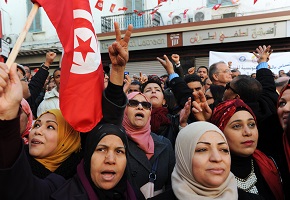
    “They arrived without warning and began killing people based on a single question: ‘Are you Sunni or Alawite?’ If you answered Alawite, you were dead.” Nine months on, Samir, 68, still struggles to talk about what happened last March in Baniyas, a town on Syria’s Mediterranean coast where hundreds of people were killed—almost all from the Alawite community, which until a few months earlier had been the Assads’ core base of support. Across the wider region, at least 1,500 people were killed.
  • Undoubtedly, 2011 was a turning point in the history of the Arab region. The 2011 popular uprisings in Tunisia, Egypt, Yemen, Sudan, Libya, Syria, and, to a lesser extent, Morocco, were followed by another wave of such uprisings in Algeria, Iraq, and Lebanon in 2019. The genocidal war raging in Gaza since 2023 has taken the region to a yet deeper abyss in existential, moral, political, and economic terms. How have thinkers of the region been interacting with these upheavals? How have these dramatic events impacted the intellectual scene of the region?
  • Riccardo Cristiano 6 November 2025
    The scale of the transformation that has swept across Syria and Lebanon after the upheavals of 2024 can be grasped in what is not a mere a detail: Syrian Foreign Minister Asaad al-Shaibani paid an official visit to Beirut to define the new judicial agreement between the two countries. For the Assads, Lebanon was at best a protectorate. The fall of Bashar al-Assad and the elimination of the Hezbollah leader, Hassan Nasrallah, along with the entire chain of command of the Party of God, have marked a turning point. But Syria still does not know where it is headed, and Lebanon is not sure it can stand on its own; both remain in the grips of economic collapse. The real novelty is that the international community continues to support them, even if the Saudis, the main donors, are clearly hinting that they expect greater awareness from both Syrian and Lebanese leaders.
  • United by geography and a long history that, since the end of the Ottoman Empire and especially during the long rule of the Assads, has taken on the characteristics of colonialism and occupation in the name of a “Greater Syria,” Lebanese and Syrians today share the same hope: that tomorrow will be different from today, putting an end to conflicts and reducing them to “wars of the past.” Reality demands this. In 2018, Lebanon’s GDP exceeded 55 billion dollars; today, it barely reaches 20 billion. One hundred thousand Lebanese pounds, which were worth 65 dollars at that time, are now worth just one. In Syria, in 2011, when the brutal repression of anti-government protests began, GDP reached 45 billion dollars; today it is only 9 billion.
  • Riccardo Cristiano 12 December 2024
    Yassin al-Haj Saleh, born in 1961, is one of Syria’s foremost intellectuals and a long-standing dissident against the Assad regime. He spent sixteen years in prison for “political reasons,” including time in the maximum-security facility of Tadmur, also known as Palmyra. With the onset of the Syrian Spring, he immediately emerged as an opponent of the regime.
  • Ilaria Romano 1 October 2024
    Elections have been postponed indefinitely in autonomous Northeastern Syria, also known as Rojava. Initially scheduled for May 30th, they were first delayed to June 11th and then to August 8th, but the timetable was never confirmed. Officially, this was attributed to insufficient time for electoral campaigning, but more realistically, it was due to genuine concerns over a potential new Turkish escalation in the area.
Load more
SUPPORT OUR WORK


Please consider giving a tax-free donation to Reset this year

Any amount will help show your support for our activities

In Europe and elsewhere
(Reset DOC)


In the US
(Reset Dialogues)


x