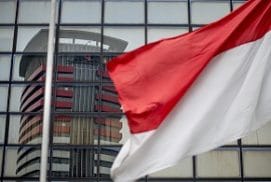
Indonesia has witnessed the mushrooming of communal violence during the early stages of its transition towards electoral democracy after the fall of Suharto’s authoritarian regime in 1998.
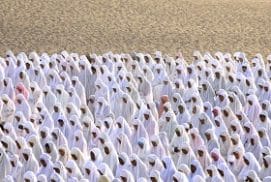
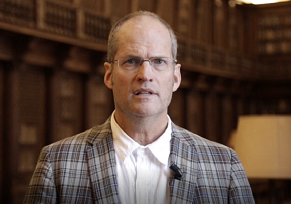
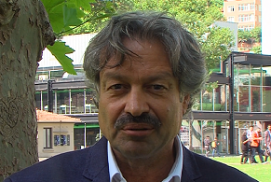
The future of Indonesian Islam, and with it that of the entire nation, involves the issue of addressing social justice. The 82-year-old Muslim leader Ahmad Syafii Maarif, is convinced of this.
Are Indonesian democracy and pluralism being endangered by the revitalization of radicalism and the increasingly invasive presence of extremist Islamic groups?
In persistently developing a model for coexistence able to peacefully contain social unrest and radical Islamism, Indonesia has been able to emerge headstrong from years of difficult dictatorship and positively react to the late-nineties financial crisis. Although Indonesia has painted a bright and prosperous image of itself, it carries behind it a thick and oppressive shadow.
Germany is not immune to the phenomenon of religious radicalism. Over the past six years, about one thousand foreign fighters have left Merkel’s country for Syria and Iraq to join ISIS and other terrorist groups.
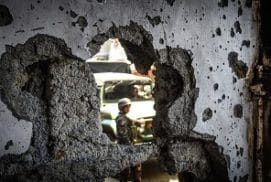
On May 23, 2017, hundreds of Isis-inspired terrorists swiftly gained control of Marawi City in Mindanao, the Philippines’ southernmost archipelago. The terrorist offensive came in response to the attempted arrest of Isnilon Hapilon, leader of the Islamic terrorist group Abu Sayyaf, on behalf of the Armed Forces of the Philippines (AFP).
With Trumpism, a kind of virulent racism and sectarianism in public discourse in the name of a response to political correctness raised in the form of Islamophobia
Can religion be a positive rather than a destructive force? asks Mohd Eiadat, of Jordan University: “Yes, in Islam, every generation should revisit it’s faith.
We use cookies to ensure that we give you the best experience on our website. If you continue to use this site we will assume that you are happy with it.Ok