france
  • Pegah Zohouri 24 June 2026
    In an age increasingly dominated by simplified narratives about identity and geopolitics, Satrapi insisted on complexity. She reminded readers that a people is never identical to its government, just as a life can never be reduced to a political category. Instead, she sought to humanize Iranians and reclaim the complexity of everyday life. That is why her work continues to resonate today: not because it explains Iran once and for all, but because it demonstrates how individual lives can illuminate history better than ideological certainties ever could. In a world increasingly drawn to black-and-white visions of politics and identity, the artist who drew almost exclusively in black and white devoted her life to revealing the shades of grey.
  • A historian and political scientist, emeritus professor at Sciences Po, and holder of the BNP-BNL-Paribas Chair in “Italian-French Relations for Europe” at LUISS, Marc Lazar is one of the foremost observers of French and European politics. In his latest book, Pour l’amour du peuple. Histoire du populisme en France, XIXe–XXIe siècle (2025), he traces the roots of French populism. In Left. Crisis and Challenges of the European Left (End of the Twentieth Century–2020s) (2024), he examines the challenges facing the European left. Earlier, together with Ilvo Diamanti in Peuplecratie (2018), he described the rise of the “people” as a new central actor in politics. We meet him on the eve of the confidence vote on September 8, which could bring down the Bayrou government and usher in a new period of political and institutional instability in France.
  • Nader Hammami 23 December 2020
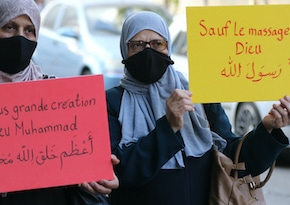
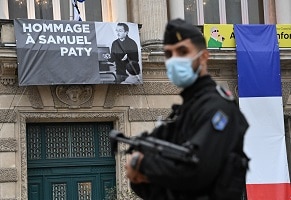
    The terrorist murder of French professor Samuel Paty in the Paris suburb in autumn 2020 has re-opened a debate concerning the liberty of teaching, freedom of expression and the role of secularism in a pluralist society. What is the specific nature of French laïcité? To what extent is there a growing confrontation with a part of the Muslim world? Why has this provoked a diplomatic incident between France and Turkey, and more broadly the boycott of French products in many Muslim countries? The on-going ideological debate concerning the role of religion in a secular society, has shown both its local and international implications, where many different actors use it for various strategic purposes. This dossier on the one hand will discuss the boundaries, the origins and the contemporary effects of freedom of expression and laïcité comparing the French, the Western and the Muslim contexts. On the other hand, it will analyse the geopolitical, local and international stakes of this debate.
  • David Rigoulet-Roze 23 December 2020
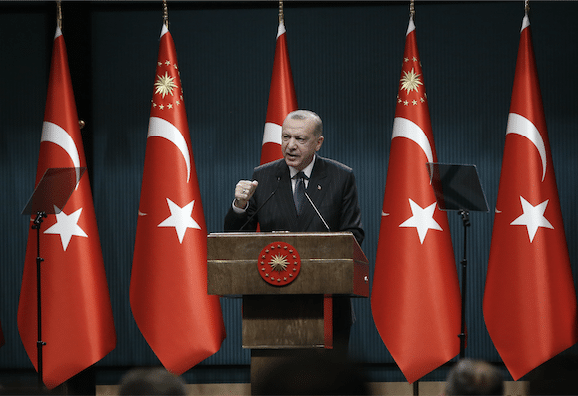
    France, and what it represents, appears in many respects to be a priority target for political Islam in general, and for its extremist avatars in particular. This not a coincidence, since France embodies a singular conception of freedom of expression inherent to laïcité, which it has historically elevated to the rank of a cardinal republican value. “France is an indivisible, laïque, democratic and social Republic. It ensures the equality before the law of all citizens without distinction of origin, race or religion. It respects all beliefs.” It is precisely this respect for all religious beliefs that has been called into question and manipulated for largely political purposes by neo-Ottoman Turkish President Recep Tayyip Erdogan amid the controversy generated by the republication, on September 2, 2020, of the cartoons of the Prophet Mohammed by the Charlie Hebdo weekly newspaper.
Load more