The threat of a nefarious alliance between extremist Muslims and social sciences academics is a political tool to marginalize both, writes Rim-Sarah Alouane.
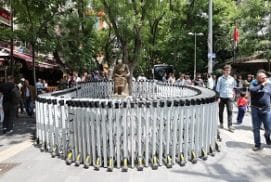
When in 1990 Turkish sculptor Metin Yurdanur was asked to design and carve a monument in honour of Human Rights to be placed in central Ankara, it was probably impossible to predict that the bronze statue of a girl sitting on a chair reading the declaration of Human Rights, sculpted by the Turkish artist, would have been one day “imprisoned”
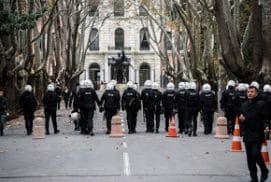
In Turkey, the curtailment of academic freedom and the diminishing autonomy of universities, that assumed unprecedented dimensions after the failed coup attempt, attracted increasingly attention both in the Turkish and international media. Ayse Caglar gives an in deep analysis on the inner workings and the consequences of these assaults on academic institutions, in order to highlight the politics of law in this regime’s authoritarian form of governance.
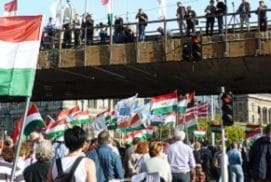
Set against the backdrop of sleepy Danubian Europe, Hungary has, in recent months, returned to being at the centre of international attention. What has brought the spotlight back onto Budapest are two laws, passed one soon after the other, which have resulted in conspiracy talk of a deliberate attack on academic freedom and the world of NGOs.
We use cookies to ensure that we give you the best experience on our website. If you continue to use this site we will assume that you are happy with it.Ok