
india
  • Maria Tavernini 26 August 2026
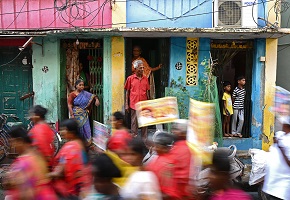
    One image will be remembered as the poster of the massive “Cockroach movement” in India. A lady standing in front of a police van full of freshly arrested protesters, one hand stretched out against the metal hood: she refused to move, for 40 minutes, under heavy monsoon rain in Mumbai. The image broke the internet and went viral, capturing the essence of the protest that forced Prime Minister Narendra Modi to make one of his Union ministers step down after public uproar, for the first time in 12 years. A movement that has become a pain in the neck for the Indian PM, who has to deal with the fallout from one of the hardest challenges his government had to face in years.
  • Maria Tavernini 3 February 2026
    Khurram Parvez has been in jail for over four years now. His crime? To be a Muslim human rights advocate from India-administered Kashmir who has been critical of the ruling Bhartiya Janata Party (BJP). In November 2021, the National Investigation Agency (NIA) arrested Parvez after having raided his home and office. He was charged under the Unlawful Activities Prevention Act (UAPA), reportedly on allegations of “terrorism funding, being a member of a terrorist organization, criminal conspiracy, and waging war against the state.” Human rights organizations that repeatedly called for his release allege Parvez’s arrest is motivated by his work documenting human rights violations in Kashmir.
  • Maria Tavernini 30 April 2025
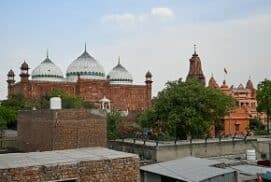
    Despite a reduced majority in Parliament, India’s ruling Bharatiya Janata Party (BJP) has pushed through a contentious amendment that has dealt another blow to multireligious India and enraged the Muslim community. In early April, after a heated debate, lawmakers passed a controversial bill reshaping how Muslim-donated properties – known as waqf – are governed, triggering protests and fierce political opposition. After its introduction, All India Majlis-e-Ittehadul Muslimeen (AIMIM) chief Asaduddin Owaisi tore up a copy of the bill in the Lok Sabha.
  • Chandra Mallampalli 16 January 2025
    January 6 marks the fourth anniversary of an unprecedented attack on the United States Capitol and American democracy. Far more than advancing “the lie” about a stolen 2020 election, the insurrectionists of January 6 presented the world with an alternative understanding of America, one arising from fears of white replacement and steeped in Christian nationalist ideas and imagery. Despite being the only twice impeached U.S. president and a convicted felon, Donald Trump not only won the last election, but also gained majorities in both the Senate and the House and made inroads into Asian, Black, and Latino American communities that typically vote Democrat. These facts should prompt us to reframe January 6 not as a shameful setback for MAGA, but as a catalyst for the movement’s onward march. To what kind of America will Trump 2.0 take us? This is where a comparative lens can be useful.
  • Raul Kumar 14 November 2024
    On October 20, 2024, tensions erupted in Jammu, Kashmir, when accusations of cow smuggling triggered a violent clash, part of an escalating wave of Gau Rakshak (cow protection vigilante) aggression across India. Under Prime Minister Modi’s third term, commonly known as “Modi 3.0,” these self-styled cow protectors have become increasingly emboldened, often targeting marginalized groups – particularly Muslims and Dalits involved in the livestock trade. Modi 3.0 has seen a noticeable rise in such incidents, with vigilante groups frequently operating with implicit political backing as they enforce cultural and religious norms around cow protection.
  • Abhijan Choudhury 10 October 2024
    Once a formidable force in Indian politics, the Left has steadily declined over the past 15-20 years. It previously governed the states of West Bengal, Kerala, and Tripura, and maintained a significant presence in the national parliament. Today, it has lost two of those states and become a marginal player. In this year’s national elections, a combination of three Left parties won just eight seats out of 545 in the Lok Sabha, the popular chamber.
  • The Rohingya have been forcibly displaced throughout Asia, including India, with repatriation to Myanmar deemed impossible. How are they being treated in India, a country lacking refugee laws and international commitments? According to Indian laws and the policies of the current BJP-led government, they are viewed as “aliens” who pose a security threat and are excluded by the implementation of the Citizenship Amendment Act. Do Indians endorse this view?
  • Maria Tavernini 28 June 2024
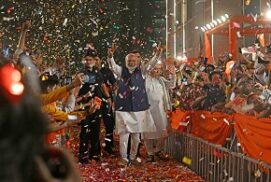
    The re-election of Narendra Modi, who has taken oath as prime minister for a rare third consecutive term, came with a bitter taste and mixed feelings. As is often the case in India, opinion and exit polls that foresaw a landslide victory for the incumbent prime minister failed to accurately predict the outcome of the world’s largest elections, which were held in seven phases from April 19 to June 1. When poll results started to roll in, it was clear that Narendra Modi and his Bharatiya Janata Party (BJP) had lost their parliamentary majority for the first time in 10 years.
Load more